
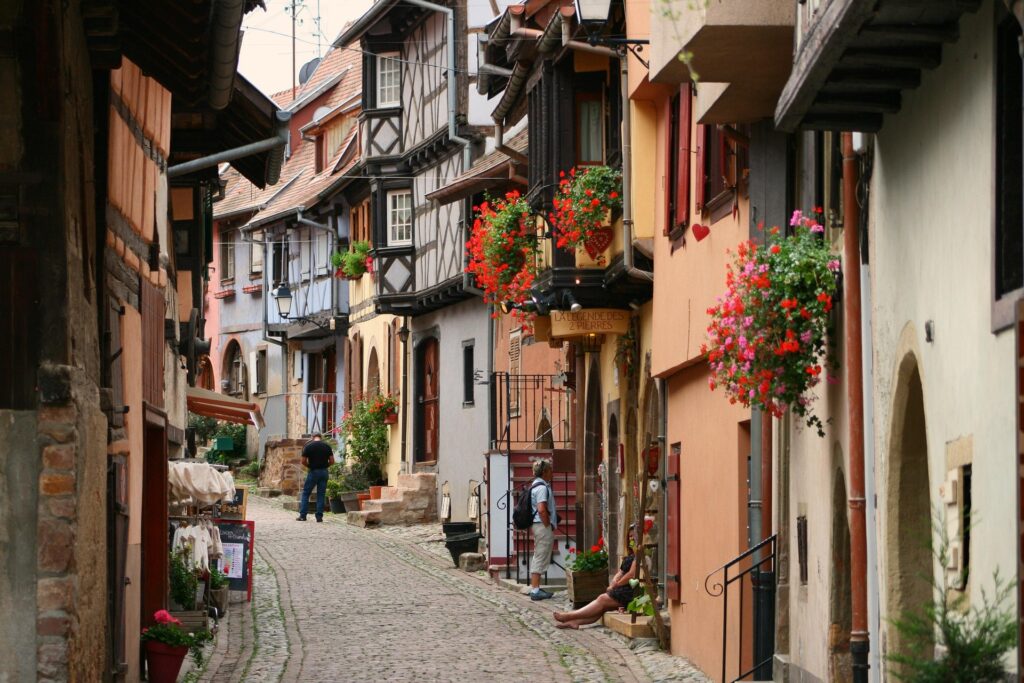
Ah, medieval France. That glorious era when knights clanked about in armour, kings plotted over goblets of wine, and peasants kept the whole show running.
Between the 5th and 15th centuries, France was a patchwork of castles, cathedrals, and cobbled lanes that still whisper tales of jousts, romances, and the occasional plague. While the royal courts were busy with politics and pageantry, stonemasons were carving out the stunning Gothic skylines we still marvel at today.
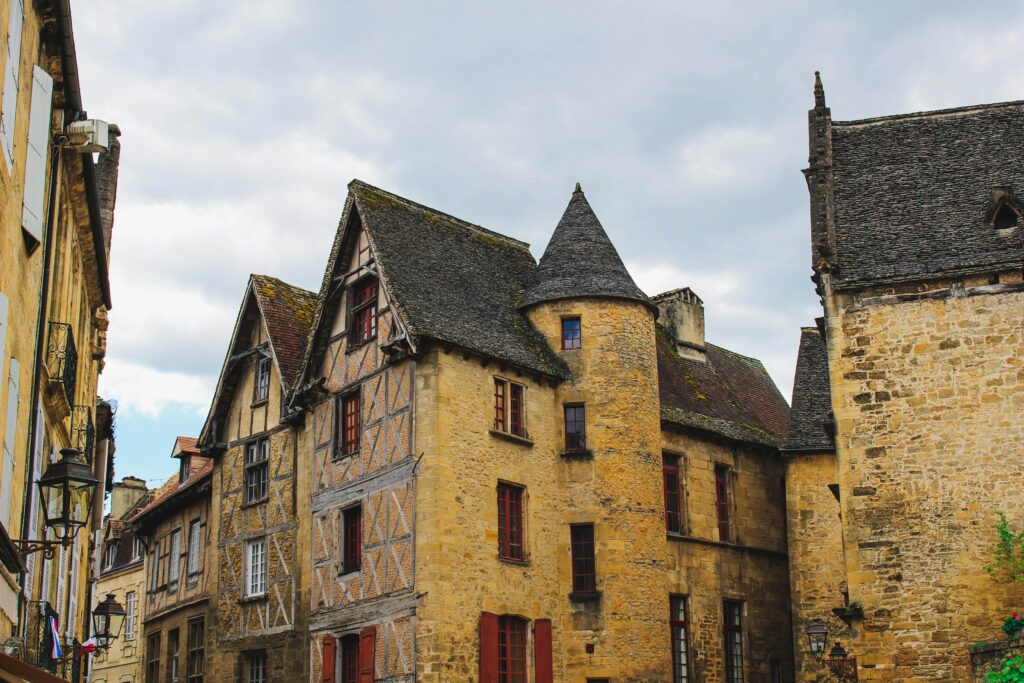
Wander through France now, and those centuries-old streets and turrets are still very much alive — only with fewer swords and slightly better cheese. So, if you fancy stepping back in time (without the risk of catching something medieval), here are 12 must-see medieval French towns and villages that bring history charmingly back to life.
1. Sarlat-la-Canéda
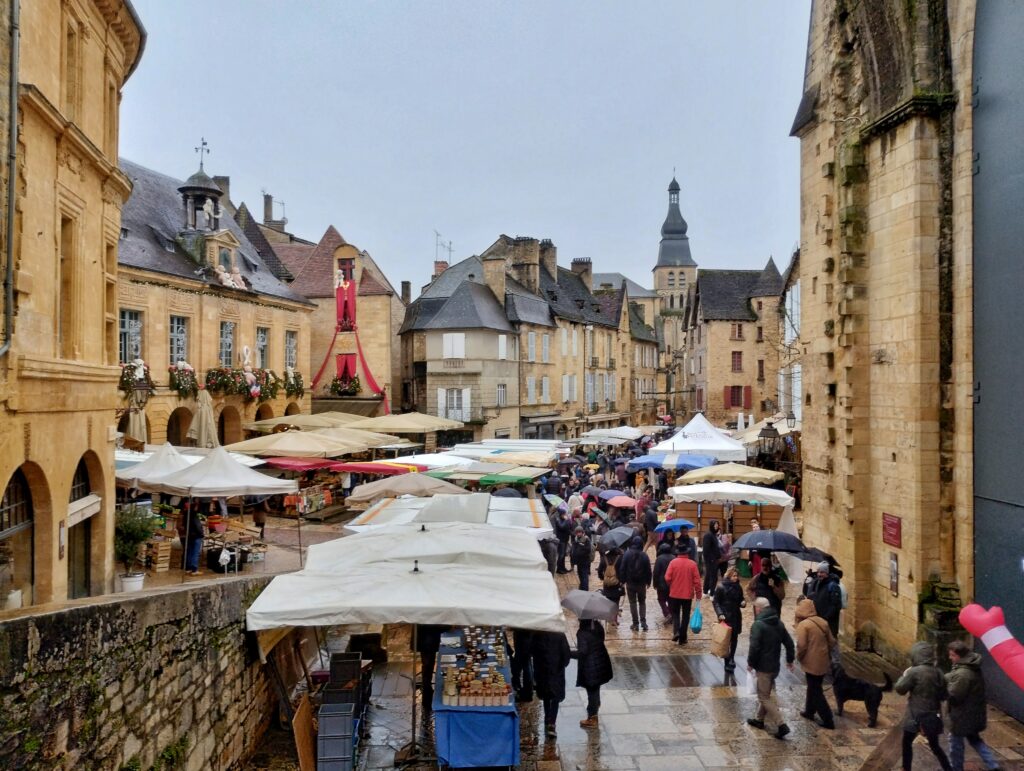
Sarlat-la-Canéda — the kind of town that makes you wonder if the medieval builders were having a bit of a laugh at everyone else’s expense, because the streets, golden-stone houses, and Gothic mansions are ridiculously photogenic. Flourishing in the 14th and 15th centuries, it was a hub of commerce and culture in the Périgord Noir. Back then, they were producing everything from fine cloth to leather goods, but nowadays, it’s famous for more edible delights. Truffles, walnuts, and cheeses that make you question whether you’ve been eating the wrong stuff all your life!
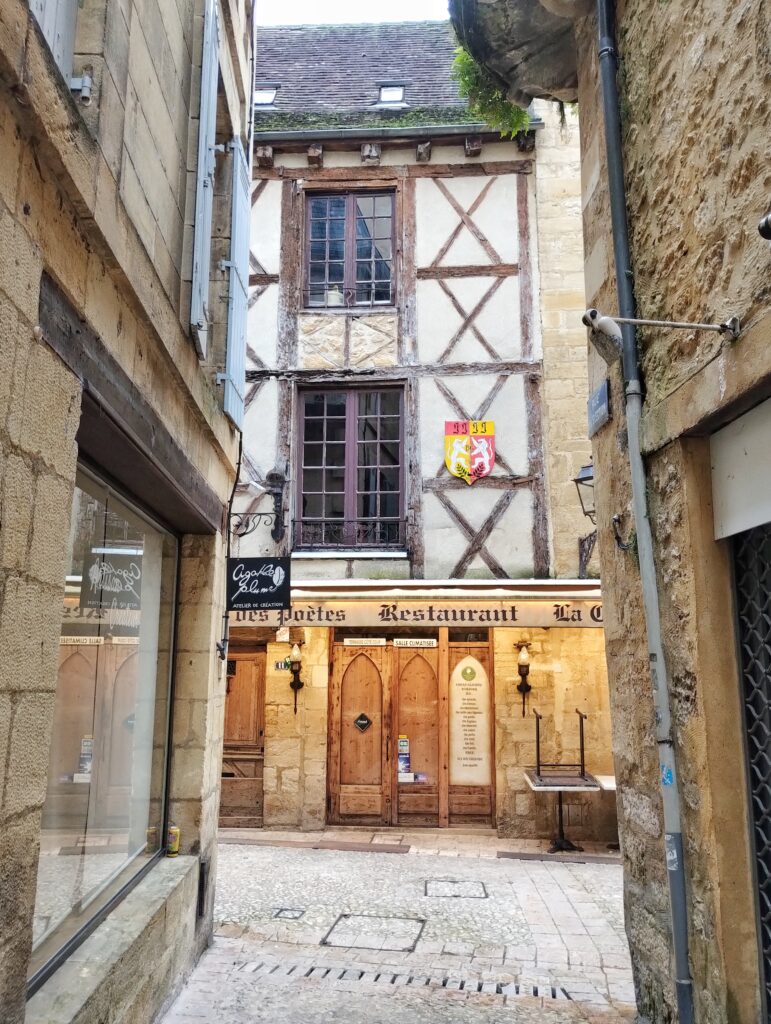
Set in a lush, rolling countryside near the Dordogne River, Sarlat is surrounded by castles, prehistoric caves, and charming villages. Basically, any excuse for a day trip is a good one. Wander its cobbled streets, browse the bustling markets, and soak in the rich tapestry of history around every corner.
Location: Dordogne, Nouvelle-Aquitaine, Southwestern France
Nearest Airport: Bergerac Dordogne Périgord Airport (~45 minutes by car) or Brive–Souillac Airport (~1 hour by car)
2. Annecy
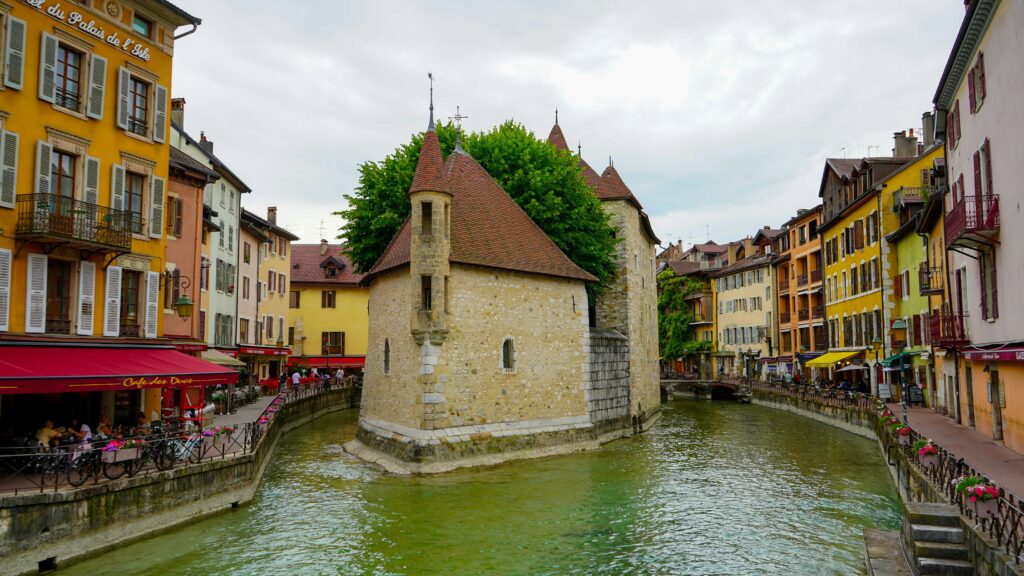
Beautiful Annecy — the sort of place where you half-expect to see a medieval duke dangling off a balcony while sipping a fancy wine. Nestled in the French Alps, this “Venice of the Alps” thrived in the Middle Ages as a trading hub and seat of the Counts of Geneva. Its canals, pastel-coloured houses, and cobbled streets make wandering around feel like stepping straight into a fairytale — only with better food and slightly fewer dragons.
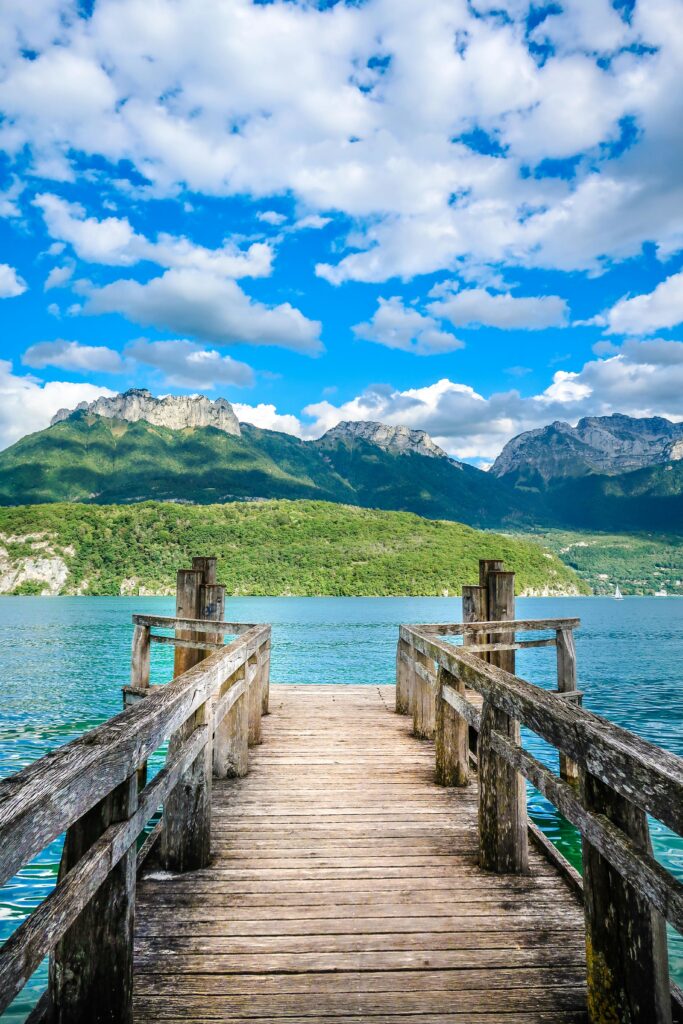
Historically, Annecy produced fine cloth and jewellery, and today it’s still renowned for local specialities like cheeses (Reblochon), freshwater fish from the lake, and a wine or two to enjoy while you admire the views. Surrounded by snow-capped peaks and the crystal-clear Lake Annecy, it’s perfect for both scenic strolls and adventures in the great outdoors.
Location: Haute-Savoie, Auvergne-Rhône-Alpes, Eastern France
Nearest Airport: Geneva Airport (~45 minutes by car) or Lyon-Saint Exupéry Airport (~2 hours by car)
3. Colmar
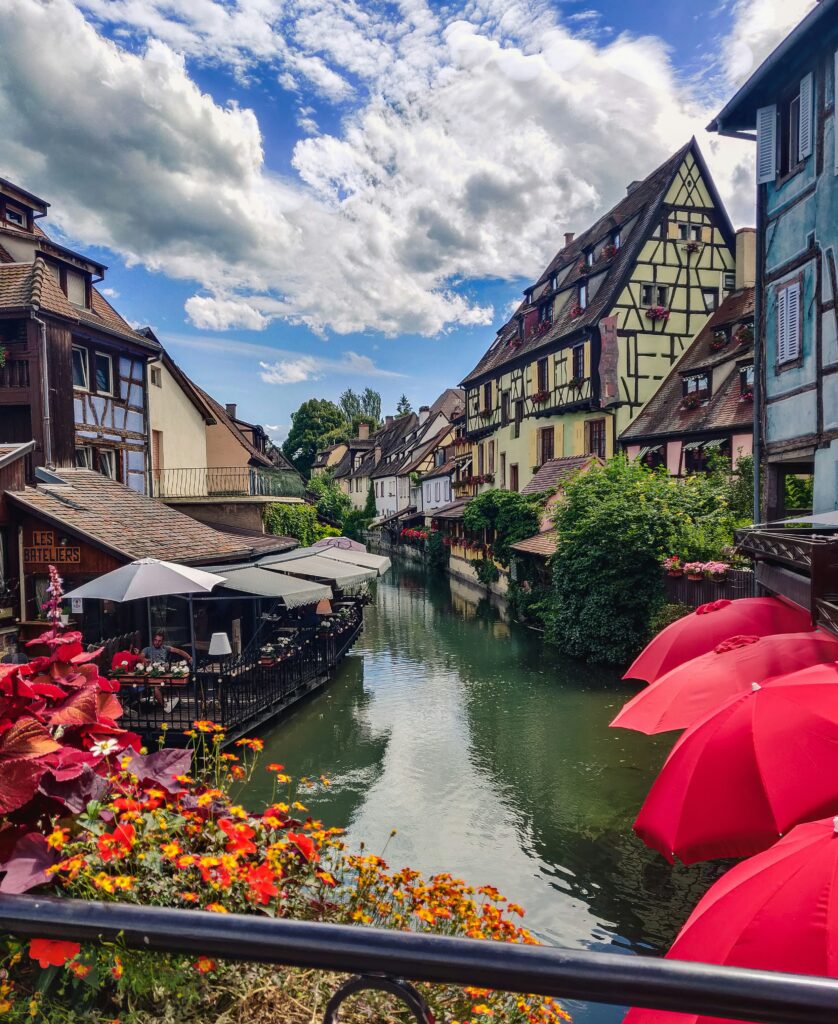
Colmar is a town that looks like it’s been dipped in a fairytale filter and left to dry. Nestled in the Alsace region near the German border, it thrived from the 13th century as a trading and wine hub. Its timber-framed houses, cobbled streets, and flower-bedecked canals make wandering around feel like stepping back in time, only with better wine and slightly fewer plague outbreaks.
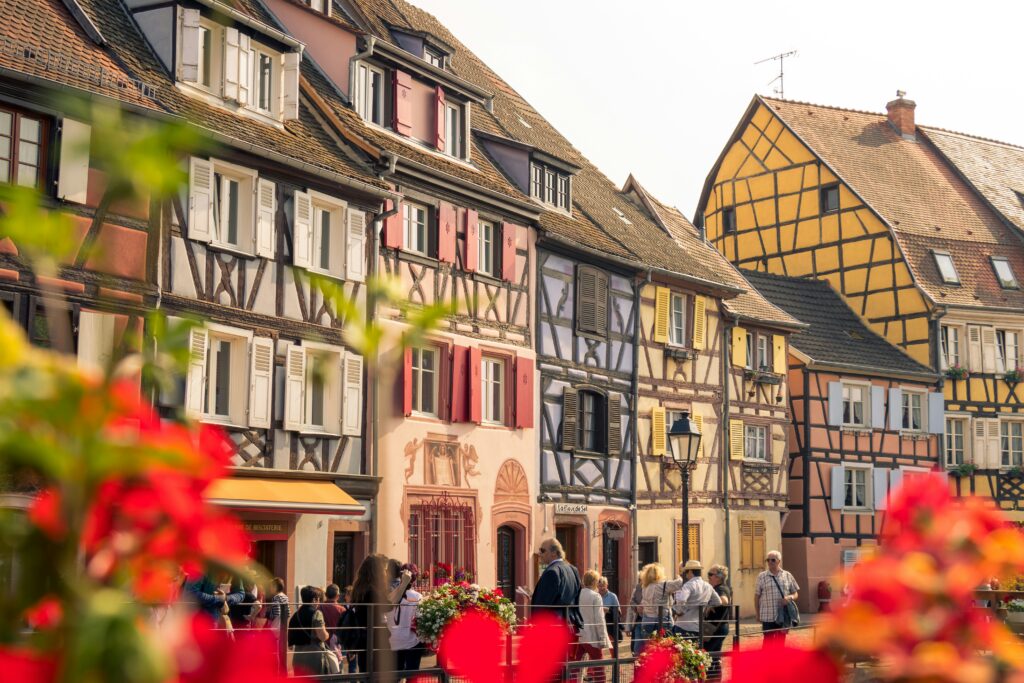
Historically, Colmar produced fine cloth, textiles, and wine, and it’s still famous today for its Alsace wines, Munster cheese, and gingerbread treats. Surrounded by vineyards, rolling hills, and the Vosges Mountains, it’s a perfect base for exploring the region’s medieval villages or sneaking off for a bit of wine tasting.
Location: Haut-Rhin, Grand Est, Northeastern France
Nearest Airport: EuroAirport Basel-Mulhouse-Freiburg (~45 minutes by car) or Strasbourg Airport (~1 hour by car)
4. Mont Saint-Michel
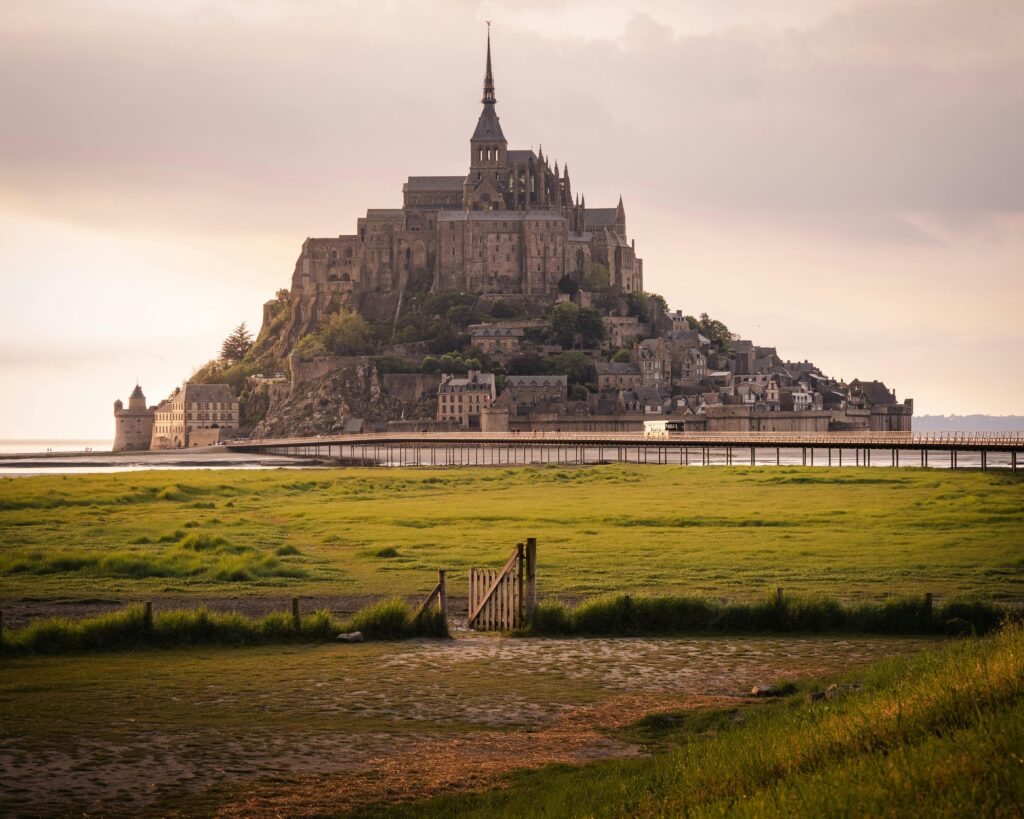
Mont Saint-Michel is basically France’s way of saying, “Look, we can build something ridiculous and breathtaking on a tiny rocky island, and you’ll absolutely love it.” Rising dramatically from the tidal flats of Normandy, this medieval marvel began in the 8th century as a small abbey and grew into a fortified village that looks straight out of a fantasy film. During the Middle Ages, it was both a pilgrimage site and a strategic stronghold, so it’s fair to say it had a bit of everything. Religion, politics, and the occasional daring escape from invading armies.
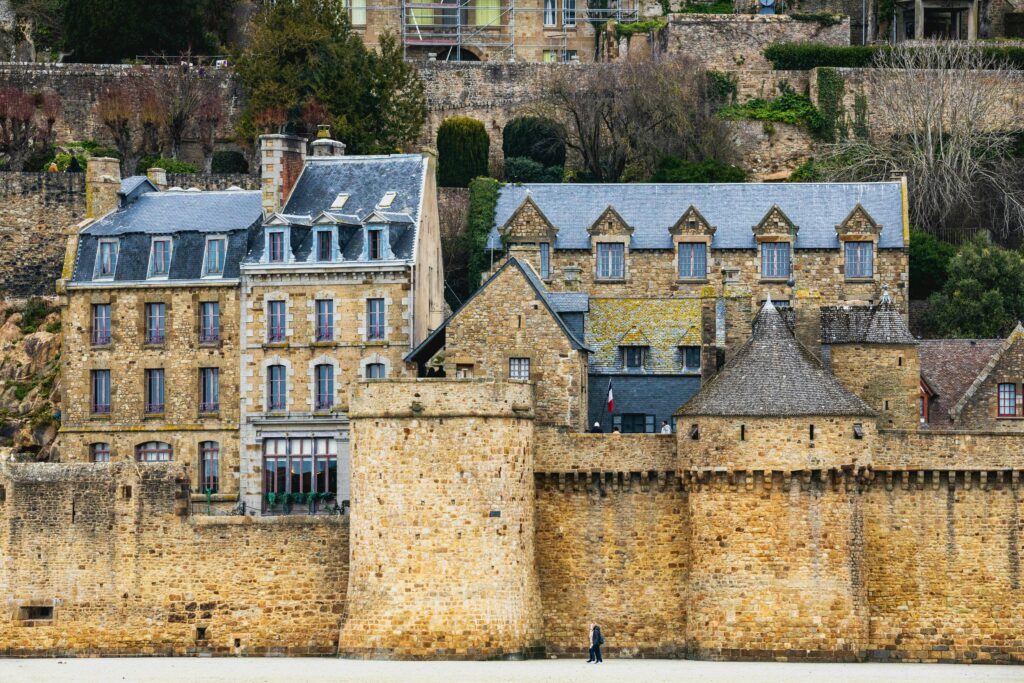
The surrounding region is known for salt marshes, Normandy apples, and the famous lamb raised on the salty grass, while the abbey itself is a masterpiece of Gothic architecture perched precariously on the rocks. Visiting Mont Saint-Michel feels like stepping into history, just with the modern bonus of cafés serving buttery pastries once you’ve climbed all those medieval steps.
Location: Normandy, Northwestern France
Nearest Airport: Rennes–Saint-Jacques Airport (~1 hour by car) or Dinard–Pleurtuit–Saint-Malo Airport (~1.5 hours by car)
5. Strasbourg
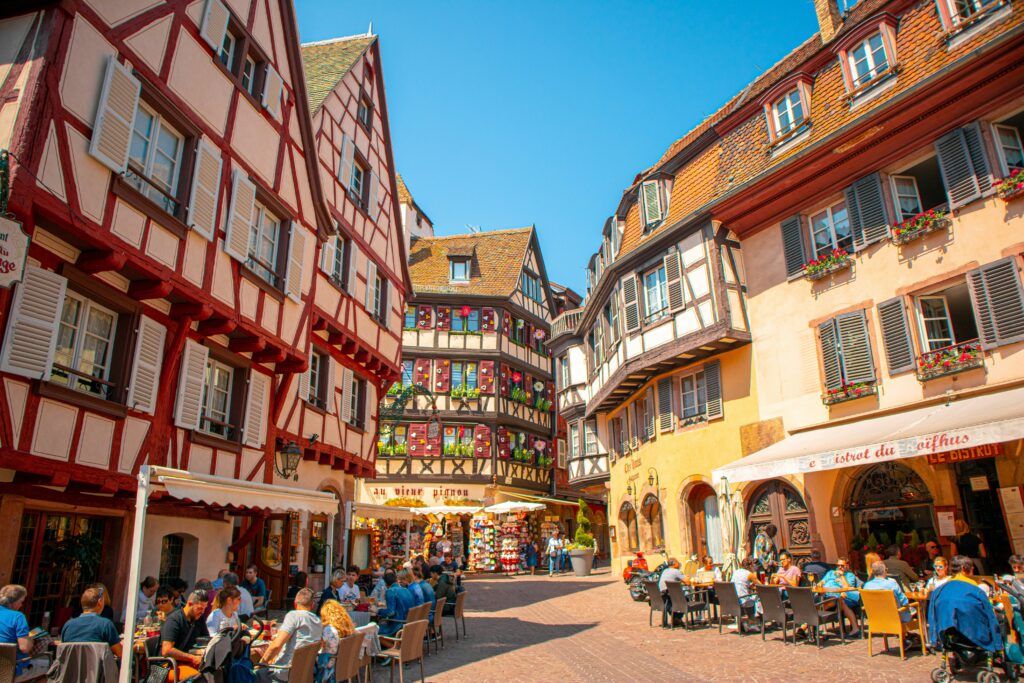
Strasbourg is the kind of city that can’t decide if it’s French, German, or just fabulous — and frankly, we’re fine with that. Nestled on the banks of the Rhine in the Alsace region, it became an important medieval trading hub from the 12th century onwards. Its picturesque “Grande Île” is packed with timber-framed houses, cobbled streets, and the towering Gothic masterpiece that is Strasbourg Cathedral, which makes every visitor feel like they should be wearing a cloak and carrying a scroll.
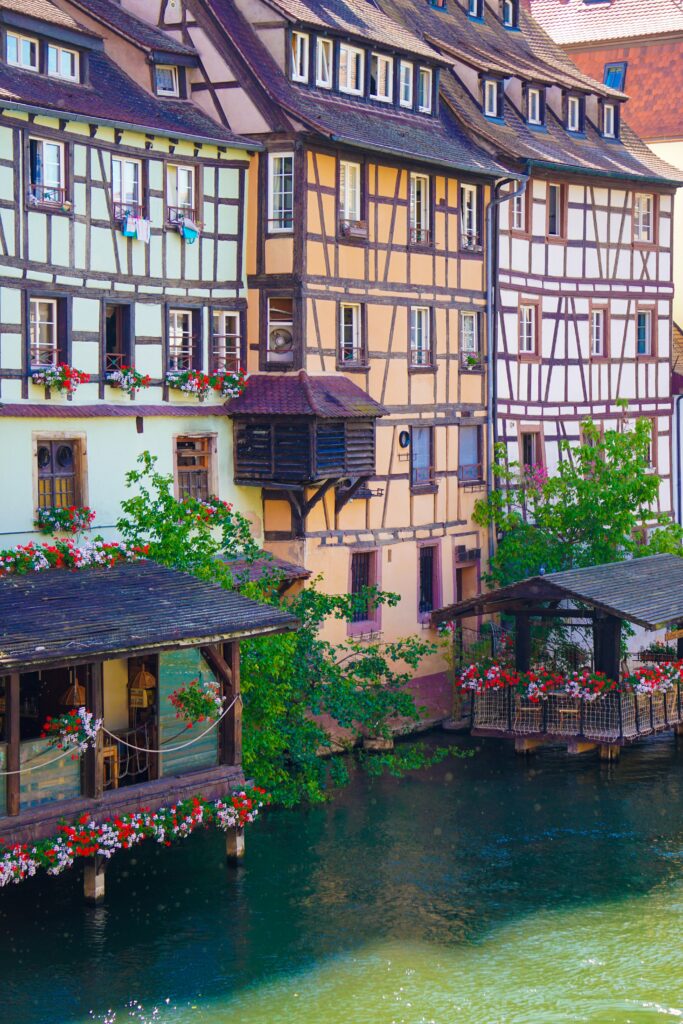
Historically, Strasbourg produced textiles, crafts, and wine, and today it’s still famous for Alsace wines, Munster cheese, and mouthwatering pastries — because even in a city with centuries of history, someone’s got to keep morale up. Surrounded by the Rhine plains and close to vineyards, Strasbourg is a perfect base for exploring both medieval history and modern European culture.
Location: Bas-Rhin, Grand Est, Northeastern France
Nearest Airport: Strasbourg Airport (~20 minutes by car)
6. Dinan
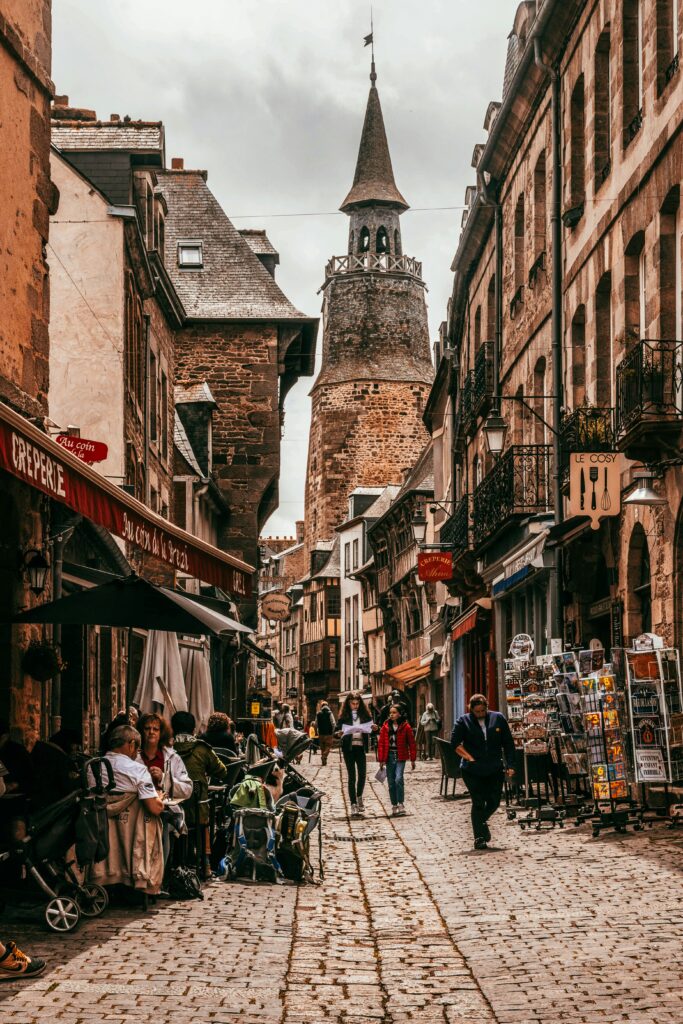
With its cobbled lanes, timbered houses, and fortified walls, Dinan feels like a place where history has been carefully preserved and is perfectly happy for you to explore it. Perched on a hill above the Rance River in Brittany, Dinan flourished in the Middle Ages as a fortified market town, and its cobbled streets, half-timbered houses, and imposing city walls still give off that “we’ve been here forever and look fabulous doing it” vibe.
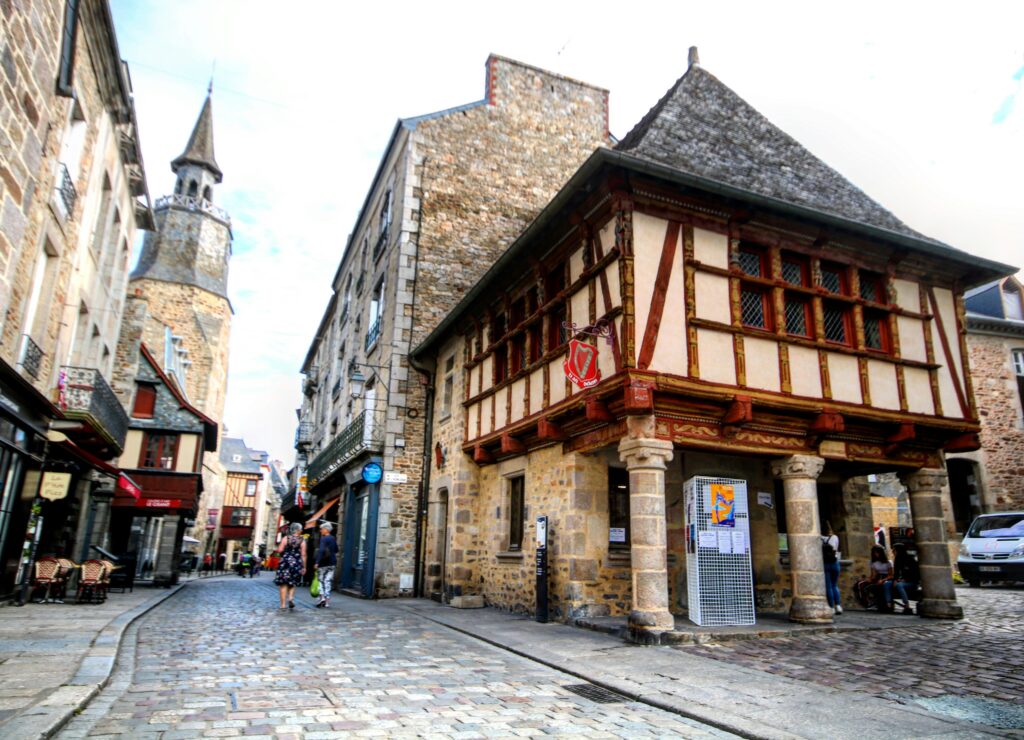
Historically, Dinan produced textiles, pottery, and wine, and today it’s famous for its artisan shops, cider, and locally brewed ales — perfect for recovering after a day of climbing medieval towers. Surrounded by rolling hills, river valleys, and scenic harbours, it’s a charming base for exploring Brittany’s coastline and other nearby medieval villages.
Location: Côtes-d’Armor, Brittany, Northwestern France
Nearest Airport: Rennes–Saint-Jacques Airport (~1 hour by car) or Dinard–Pleurtuit–Saint-Malo Airport (~45 minutes by car)
7. Carcassonne
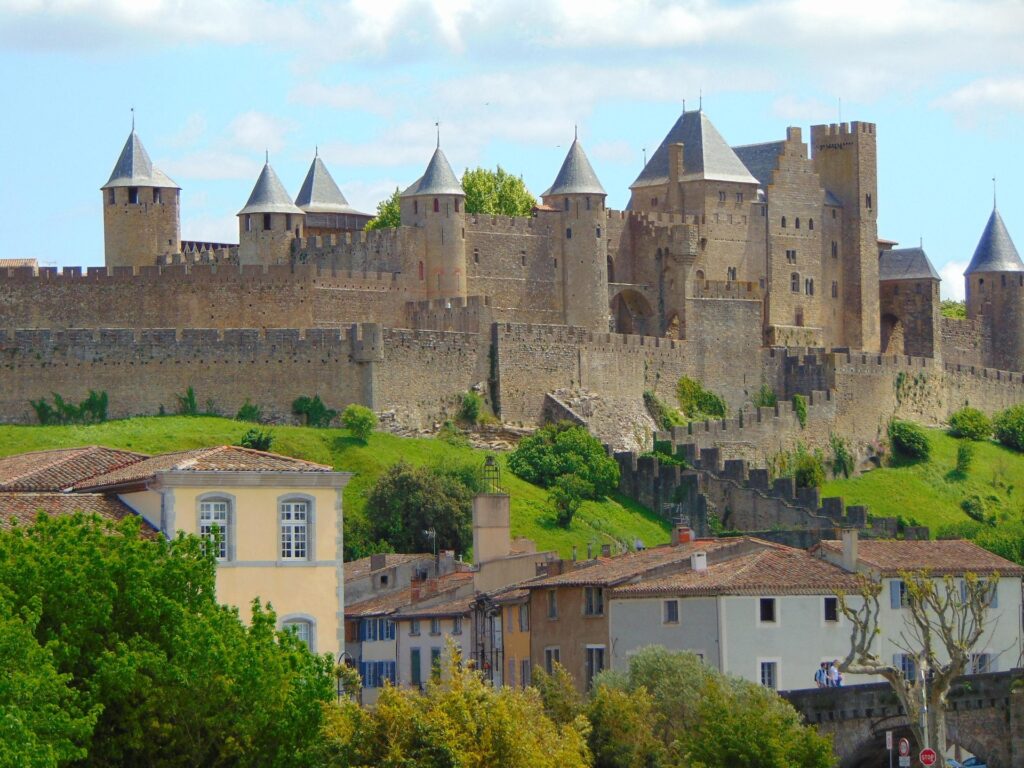
If you’ve ever dreamed of walking into a real-life fairy tale — the sort with turrets, drawbridges, and the faint sound of distant jousting — then Carcassonne is your spot. Perched on a hill in southern France, this fortified city looks like it was designed by someone who thought “castle walls” should come in extra-large. Its medieval roots go back to Roman times, but it truly flourished in the 12th century as a stronghold for the Trencavel family, and later as a key fortress in the crusades and the Hundred Years’ War.
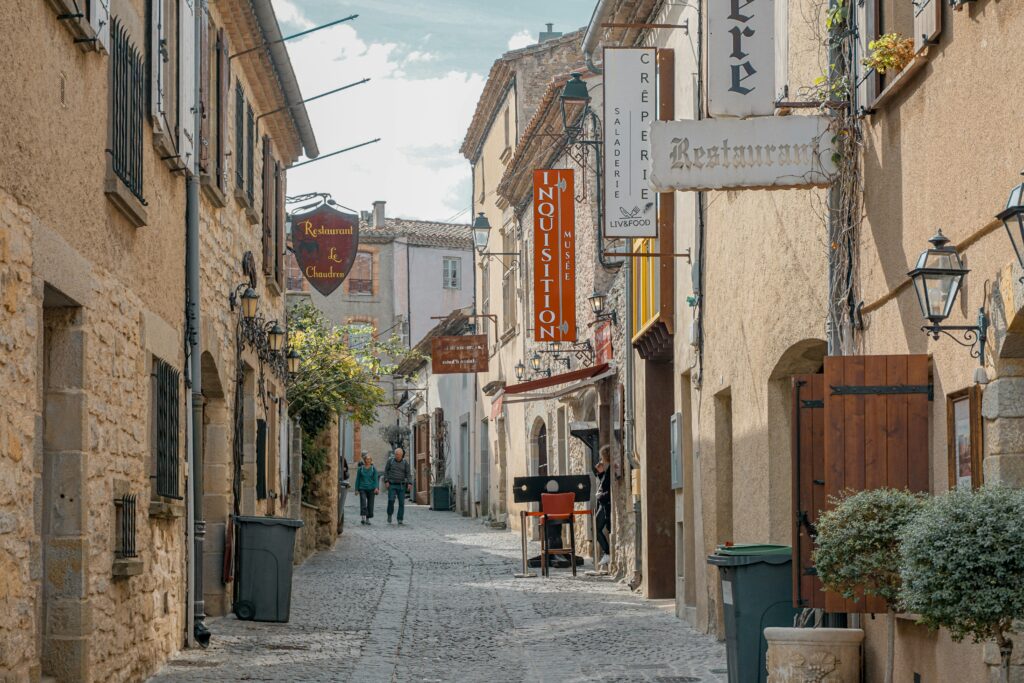
Back in the day, Carcassonne produced wine, wool, and textiles — not bad for a place that spent much of its history fending off sieges. Now, it’s more about wandering the streets, enjoying a glass of wine, and imagining the stories the walls could tell. Surrounded by vineyards, rolling countryside, and the Canal du Midi, it’s a feast for both history buffs and anyone who enjoys a glass of red with a view.
Location: Aude, Occitanie, Southern France
Nearest Airport: Carcassonne Airport (~15 minutes by car) or Toulouse-Blagnac Airport (~1 hour by car)
8. Eguisheim
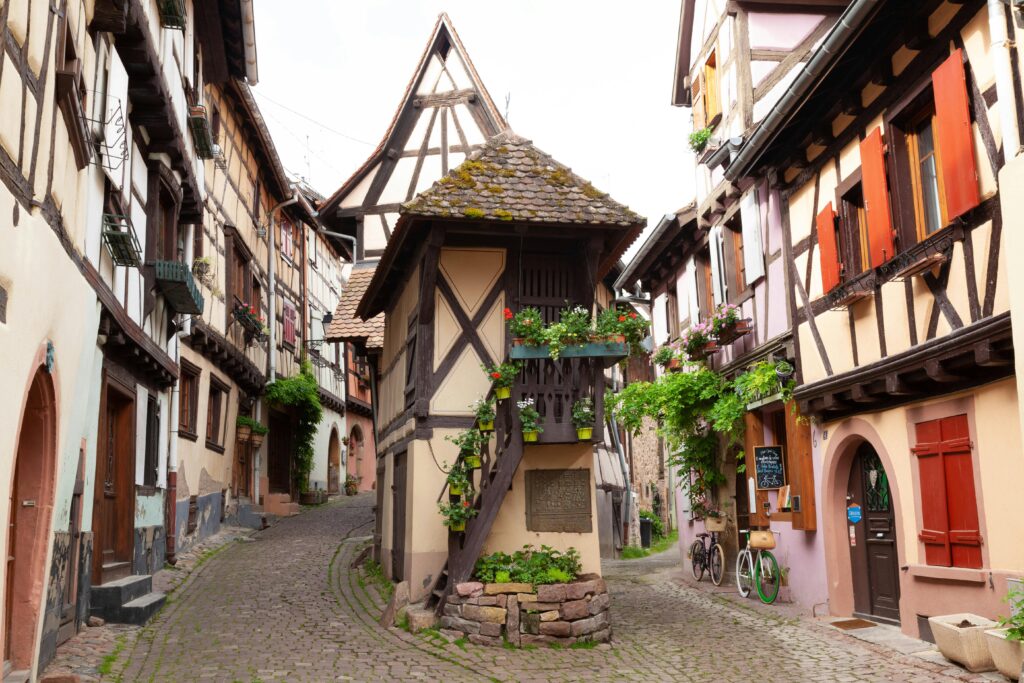
Eguisheim is the kind of village that makes you double-check it’s not part of a film set. With its perfectly preserved medieval charm and streets that loop like a snail shell, it’s almost suspiciously pretty — as if someone tidies the flowers every morning just to keep up appearances. Founded in the 8th century and later thriving through wine production, this Alsatian gem has been perfecting the art of looking effortlessly charming for over a thousand years.
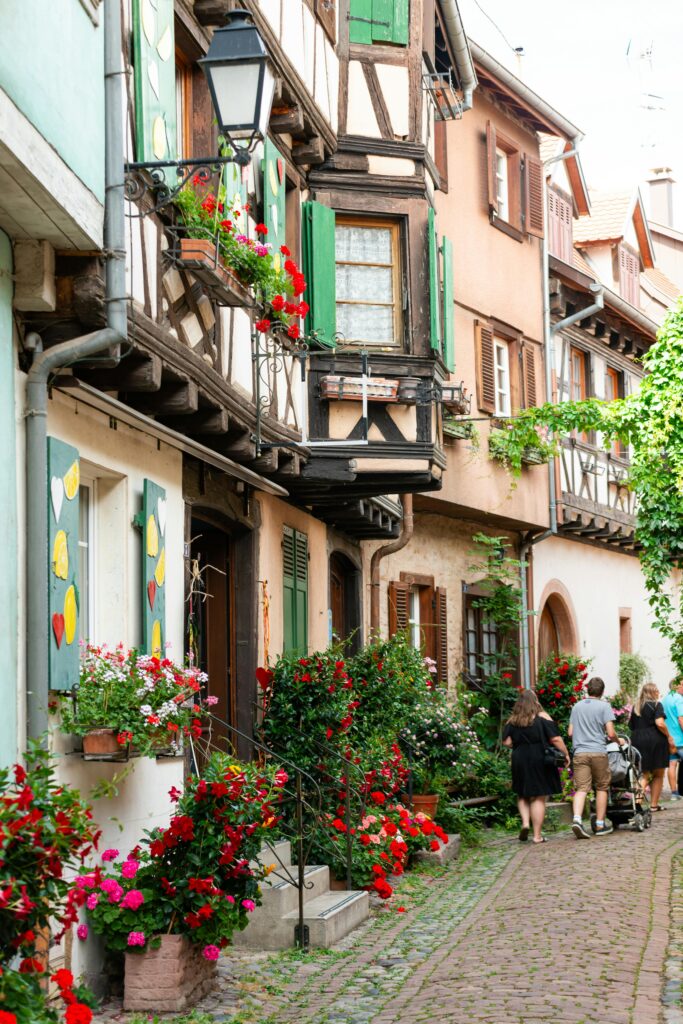
Historically, Eguisheim was known for its vineyards, crafts, and textiles, and today it’s still a proud producer of top-notch Alsace wines. Wandering through its cobbled lanes feels like stepping back in time, only now the inns serve chilled Riesling instead of mead. Surrounded by rolling vineyards and castle ruins, it’s an irresistible mix of history, wine, and that smug sense of “I’ve found the prettiest spot in France.”
Location: Haut-Rhin, Grand Est, Northeastern France
Nearest Airport: EuroAirport Basel-Mulhouse-Freiburg (~45 minutes by car) or Strasbourg Airport (~1 hour by car)
9. Cordes-Sur-Ciel
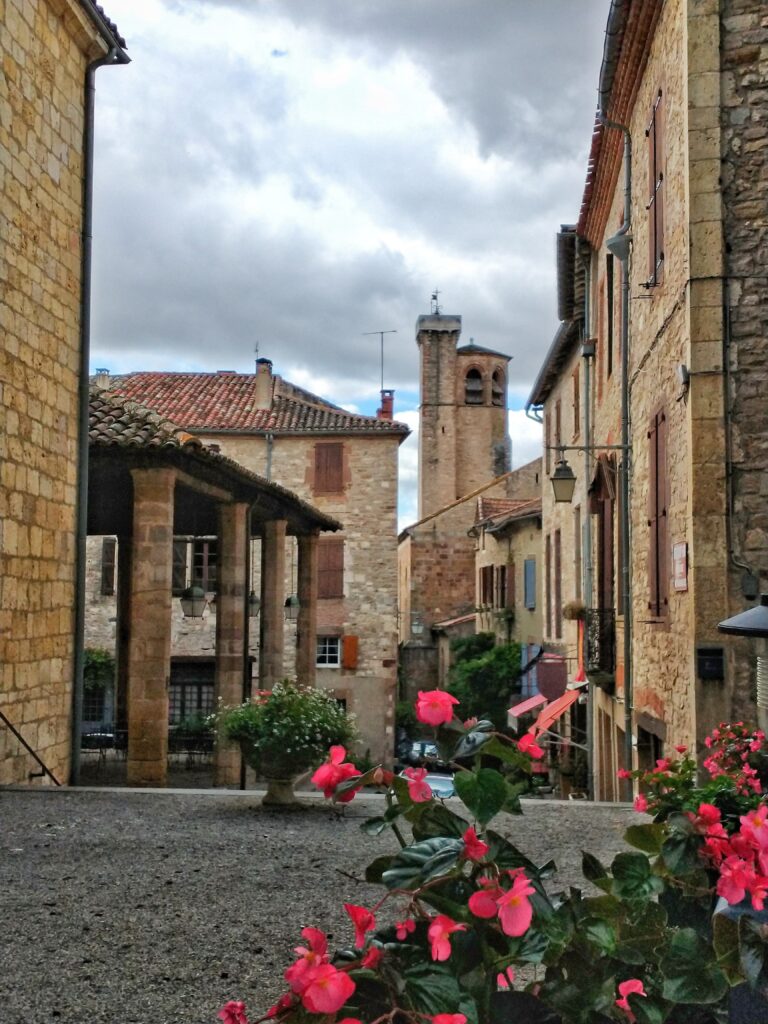
Cordes-sur-Ciel is one of those towns that appears out of the mist like it’s auditioning for a period drama. Perched high on a hill in southern France, it’s a masterpiece of medieval architecture — all winding cobbled streets, honey-coloured stone, and views that make you question why you ever bothered with flat ground. Founded in 1222 by the Count of Toulouse, it became a thriving centre for leather and textile trade, with merchants clearly doing rather well for themselves judging by the grand Gothic houses that still stand today.
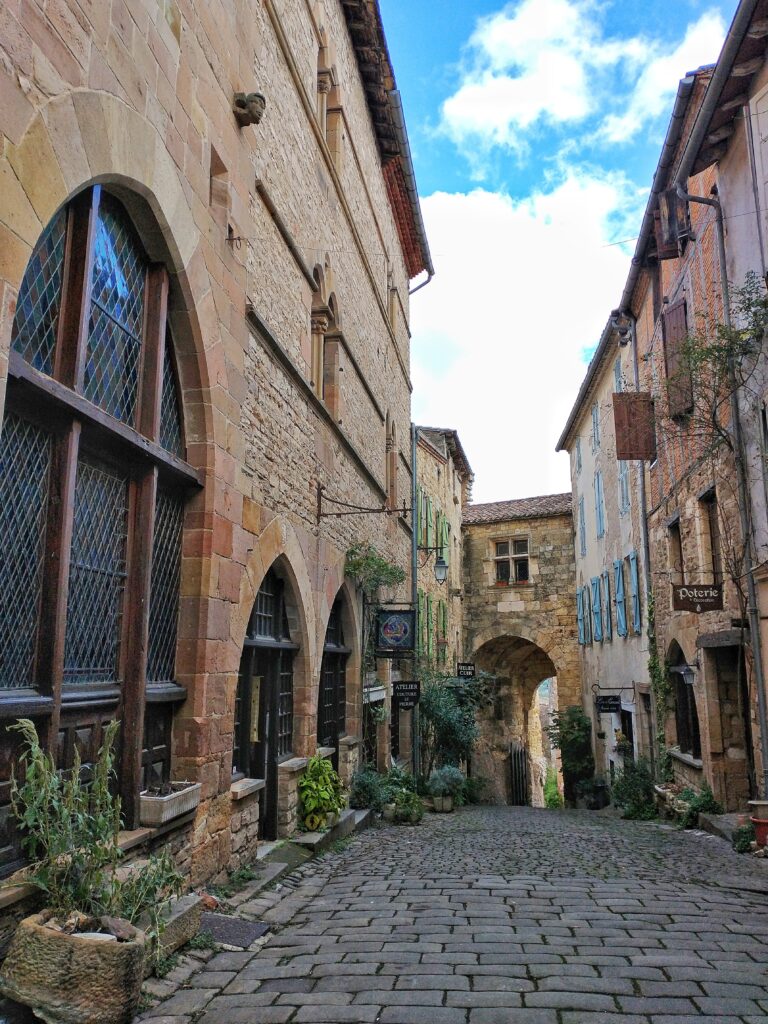
The surrounding Tarn countryside is all rolling hills, vineyards, and sunflower fields — basically the French countryside as you’d picture it in a daydream. These days, the town attracts artists, dreamers, and anyone who fancies a good leg workout climbing its steep lanes. But trust us, the view (and the wine at the top) is worth every step.
Location: Tarn, Occitanie, Southern France
Nearest Airport: Toulouse-Blagnac Airport (~1 hour by car)
10. Lautrec
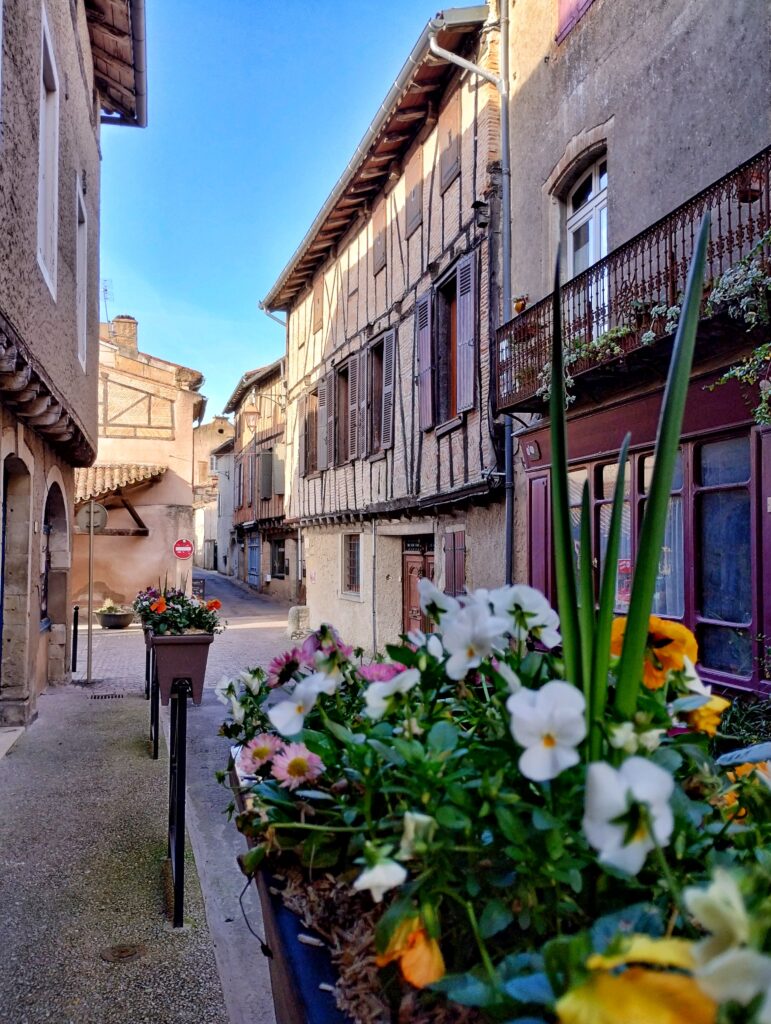
Lautrec feels like it’s been quietly showing off for centuries — and with good reason. Nestled in the Tarn countryside, this beautifully preserved medieval gem dates back to the 10th century and still boasts half-timbered houses, cobbled lanes, and a market square that’s seen more gossip than a royal court. It once thrived on trade and craftsmanship, particularly weaving and dyeing, but these days it’s better known (and rightly proud) of its award-winning pink garlic — the sort of garlic that makes supermarket bulbs look positively embarrassed.
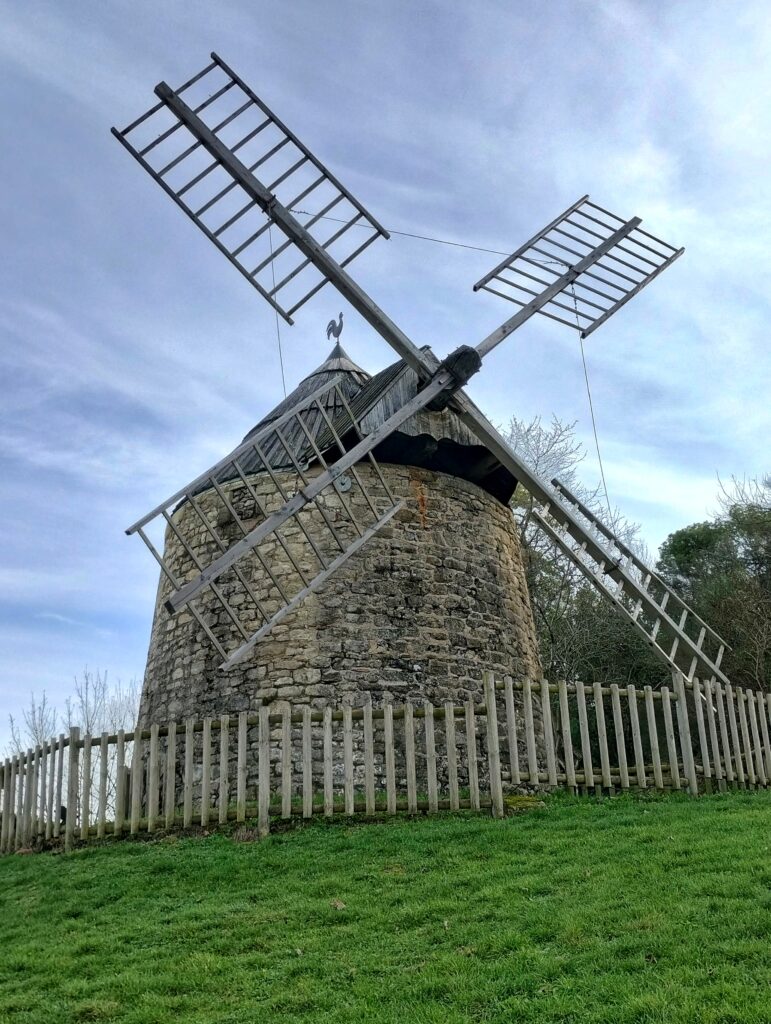
Surrounded by rolling fields, windmills, and views that stretch for miles, Lautrec is the perfect mix of rustic charm and French flair. Wander up to the old windmill for the best panorama, then reward yourself with a local wine and something garlicky — because when in Lautrec, you might as well embrace it.
Location: Tarn, Occitanie, Southern France
Nearest Airport: Toulouse-Blagnac Airport (~1 hour 15 minutes by car)
11. La Roque-Gageac
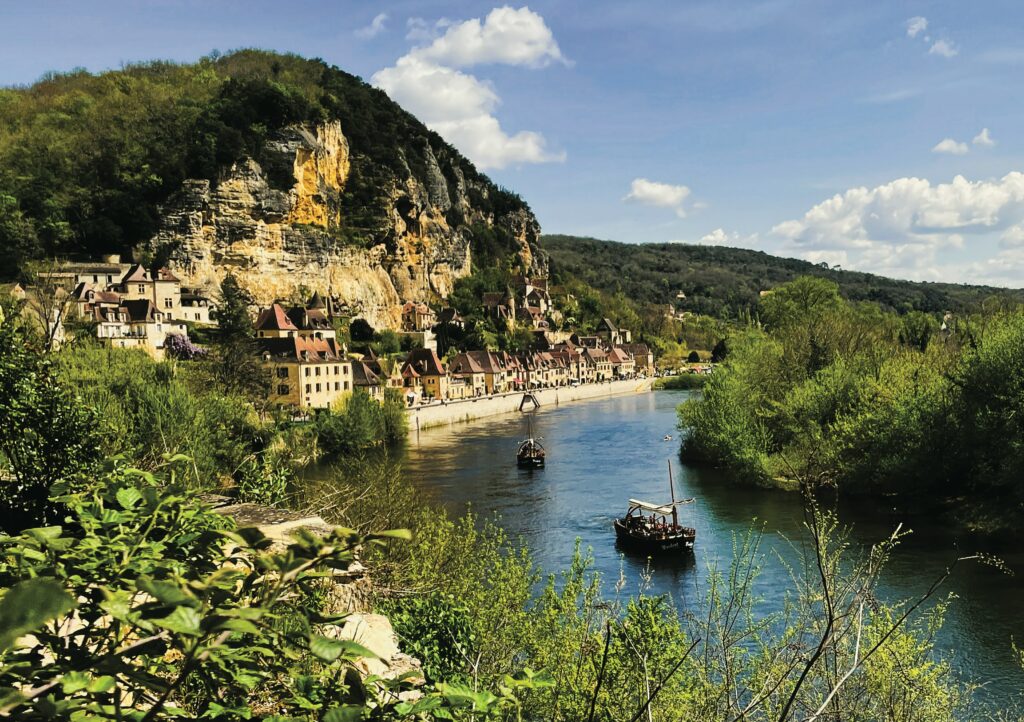
La Roque-Gageac makes you do a double take — partly because it looks impossibly pretty, and partly because you can’t quite believe anyone thought “let’s build a village into a cliff” was a sensible idea. Hugging the banks of the Dordogne River, its honey-coloured stone houses are tucked beneath towering limestone cliffs, giving it a setting that’s equal parts dramatic and charming. In the Middle Ages, it was a bustling river port and defensive stronghold, and you can still see remnants of its fortified past hidden among the cliffs.
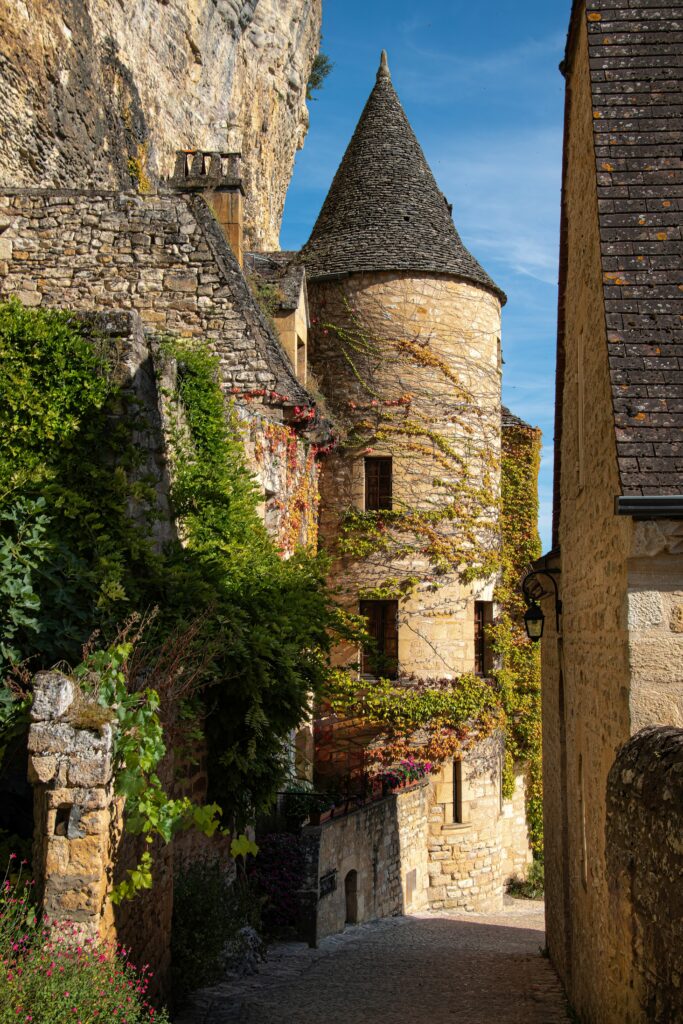
These days, it’s a haven for lazy river cruises, canoe trips, and leisurely strolls — ideally followed by something involving duck, truffles, or a generous glass of Bergerac wine. The microclimate here is so mild that palm trees and banana plants grow happily alongside medieval stone walls, which feels wonderfully eccentric and very French.
Location: Dordogne, Nouvelle-Aquitaine, Southwestern France
Nearest Airport: Bergerac Dordogne Périgord Airport (~1 hour by car) or Brive–Souillac Airport (~1 hour by car)
12. Rouen
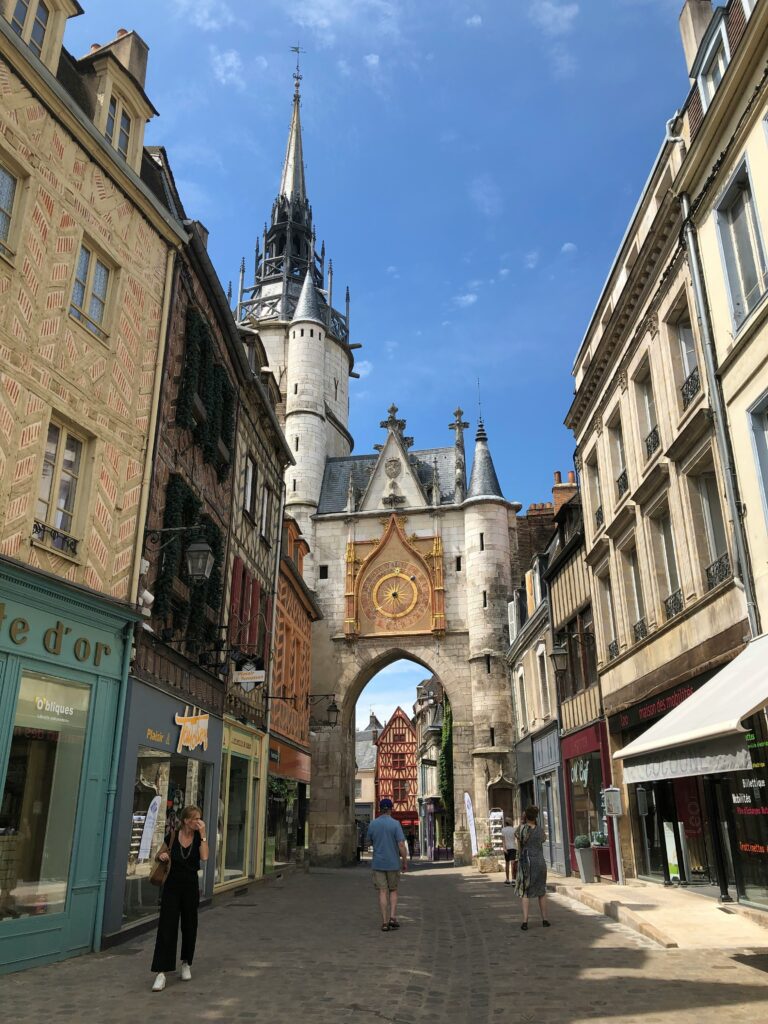
Rouen wears its history loudly and rather proudly on its sleeve. Once one of the most important medieval cities in France, it was a thriving hub of trade, cathedrals, and occasional drama (looking at you, Joan of Arc). The half-timbered houses, winding cobbled streets, and towering Gothic cathedral make it easy to imagine merchants, monks, and mischief-makers bustling about centuries ago — though these days you’re more likely to bump into someone with a camera and a croissant.
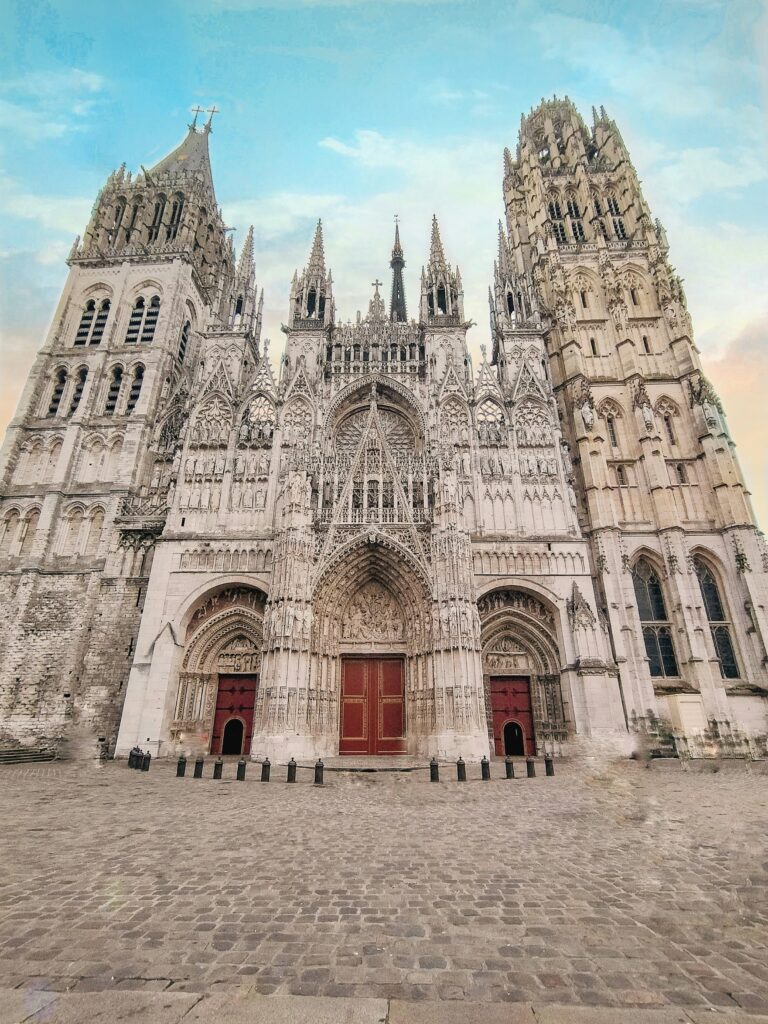
In its medieval heyday, Rouen prospered through the textile and river trade, and it still keeps busy with a lively market scene and an excellent reputation for cheese, cider, and Calvados — basically, Normandy in a nutshell. Surrounded by rolling countryside and just a short hop from the Seine’s meandering banks, it’s the kind of place that feels grand yet wonderfully down to earth — a city with centuries of stories and just the right amount of French swagger.
Location: Normandy, Northern France
Nearest Airport: Paris Beauvais–Tillé Airport (~1.5 hours by car) or Paris Charles de Gaulle Airport (~2 hours by car)
From the cobbled streets of Sarlat to the hilltop towers of Cordes-sur-Ciel, France’s medieval towns and villages are living snapshots of history — each one brimming with stories, charm, and just enough character to make you feel like you’ve stepped into another century.
Whether you’re wandering timbered lanes, sipping local wine in a sunny square, or simply marvelling at the fortresses and cathedrals that have stood the test of time, these towns invite you to slow down, soak it all in, and remember that history isn’t just something in books — it’s something you can wander through, taste, and even touch.
So pack your comfiest walking shoes, keep your camera at the ready, and let these medieval gems show you why France’s past is just as delightful as its present.

