There’s something about Italian villages that makes you slow down. Maybe it’s the cobblestones. Maybe it’s the promise of gelato. Or maybe it’s the fact that you can’t walk ten metres without needing to stop for a photo!
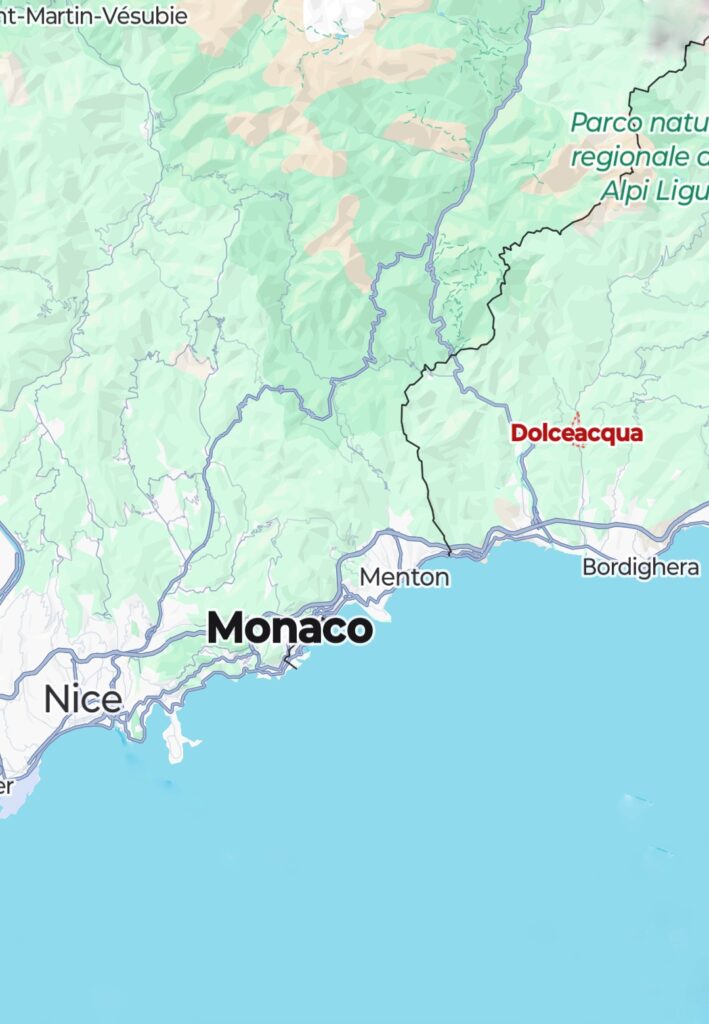
Dolceacqua is one of those places. Small, perfectly wonky, and perched in the Ligurian hills near the French border, it looks like someone built a movie set and forgot to pack it away!
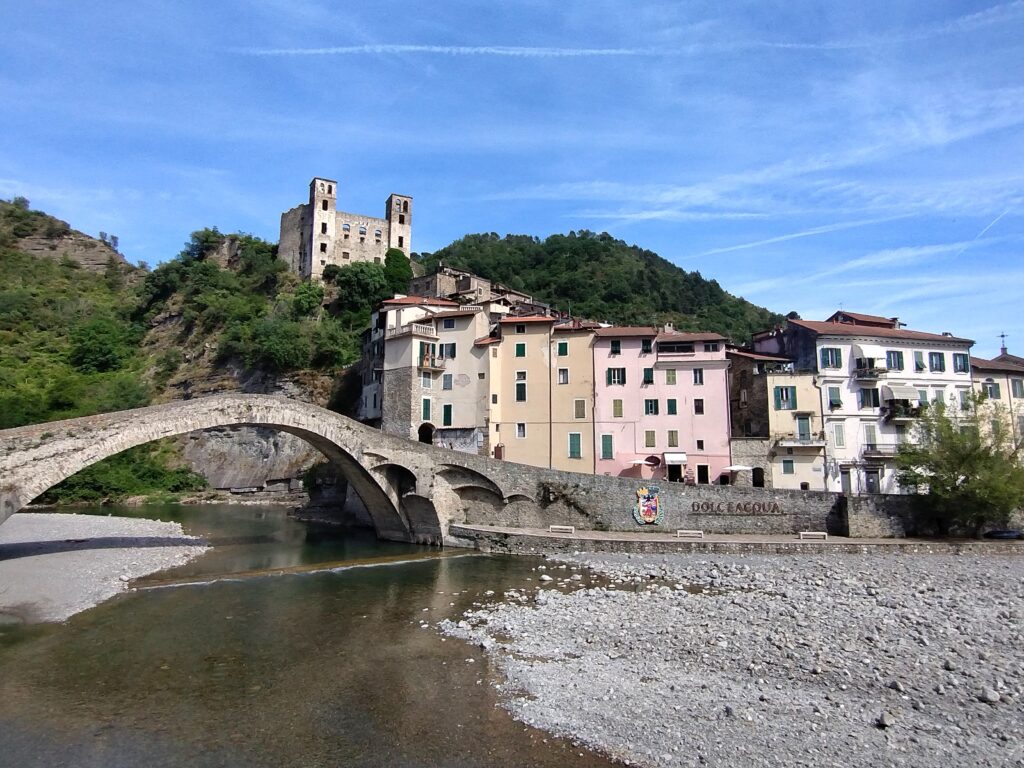
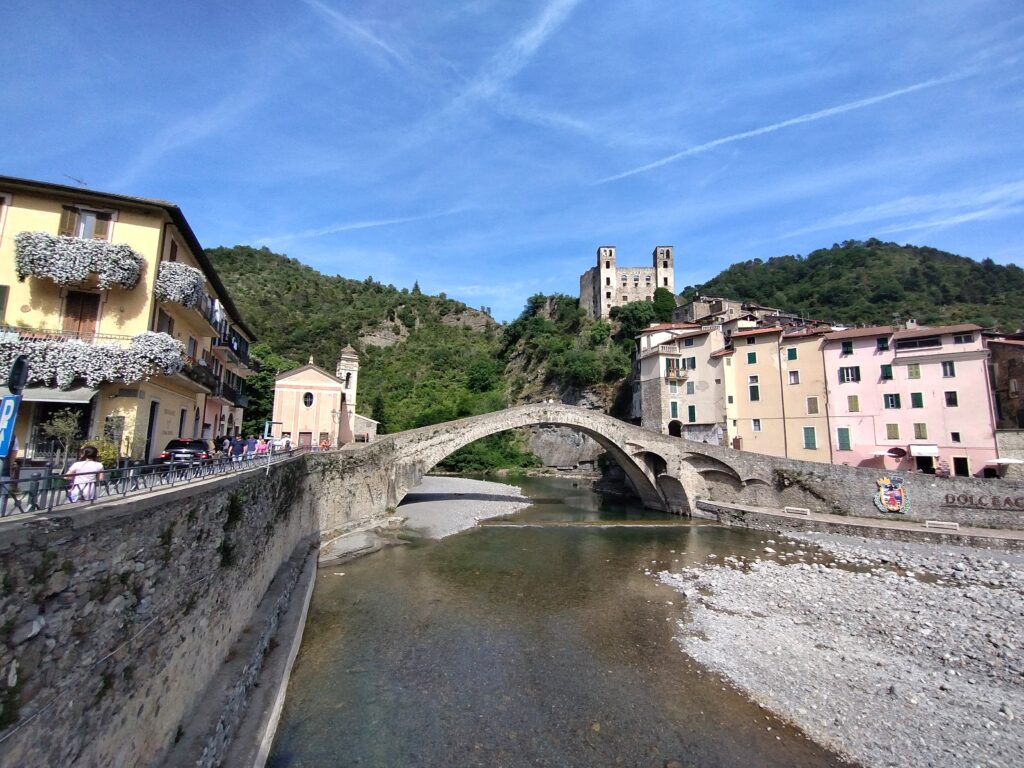
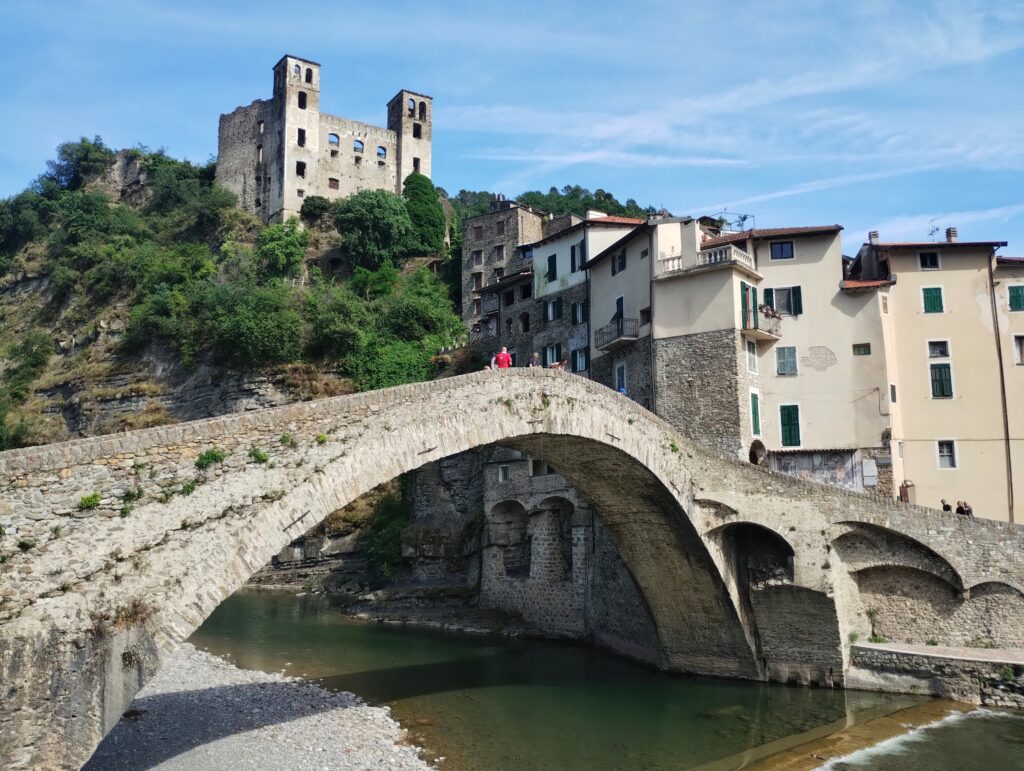
Even Claude Monet couldn’t resist. He came here in 1884, painted the bridge, and left behind one of his prettiest landscapes. Today, that same bridge — the Ponte Vecchio — still arcs across the Nervia River, just with more selfie sticks and fewer paintbrushes.
Wandering the Old Town
We crossed the river into the old village, where streets turned into alleyways, and alleyways turned into staircases. Dolceacqua doesn’t really have a straight line anywhere — just a tangle of arches, balconies, and doorways that all seem to lead somewhere interesting. A jumble of stone houses that look like they were stacked by hand (probably because they were)!
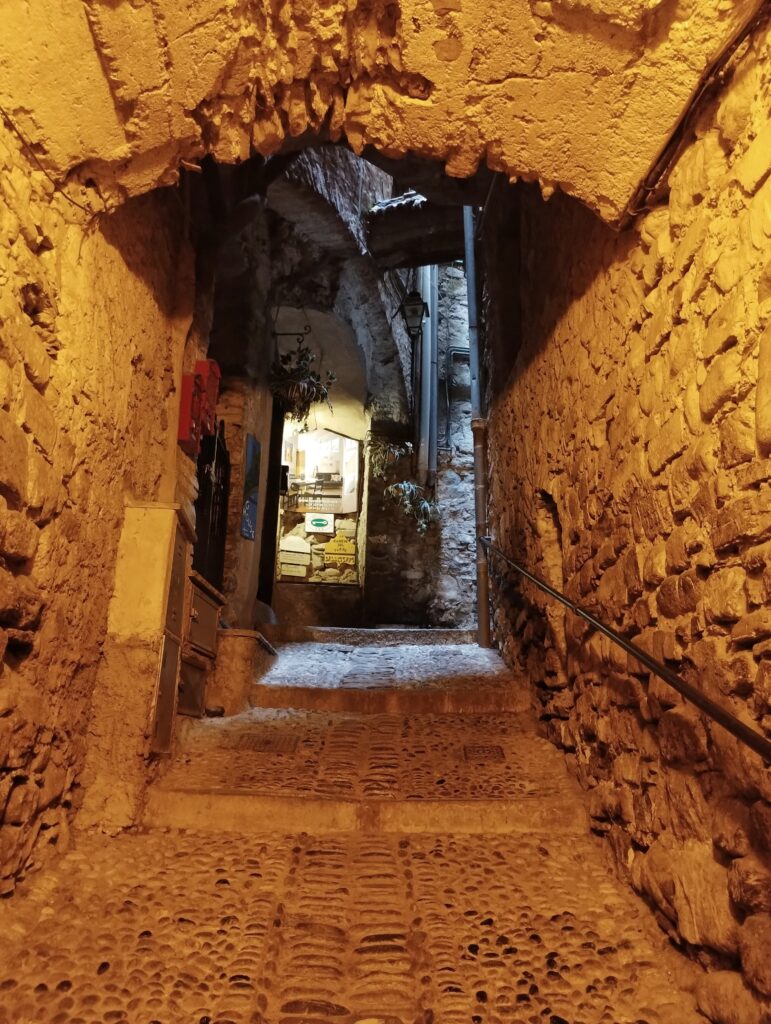
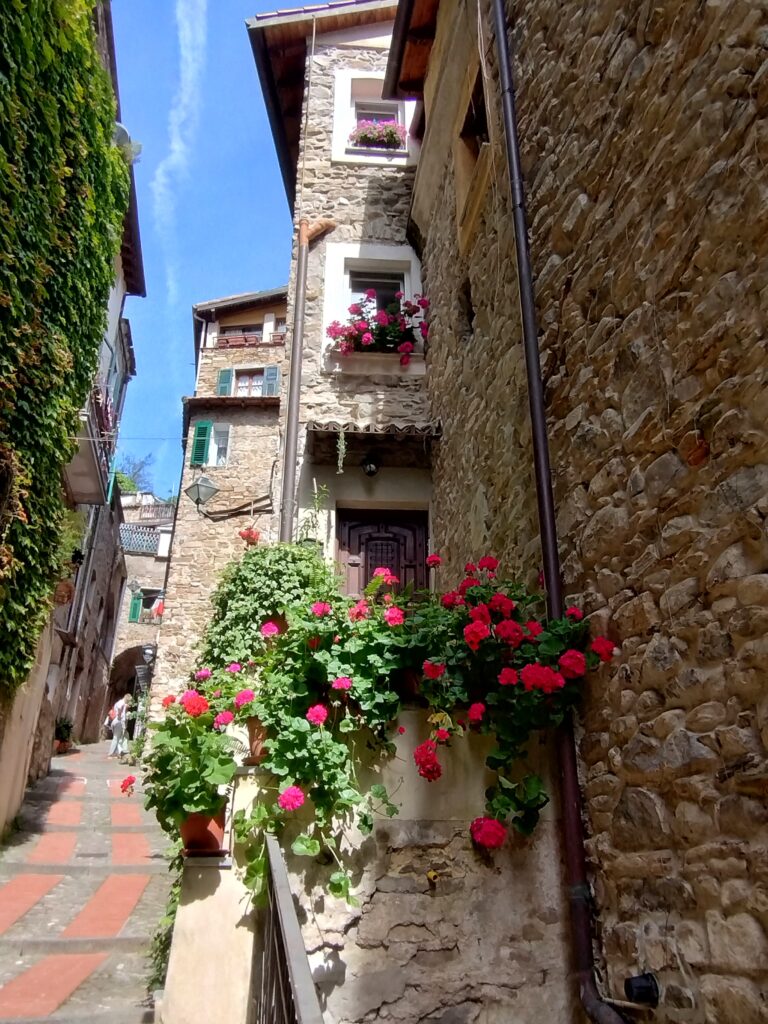
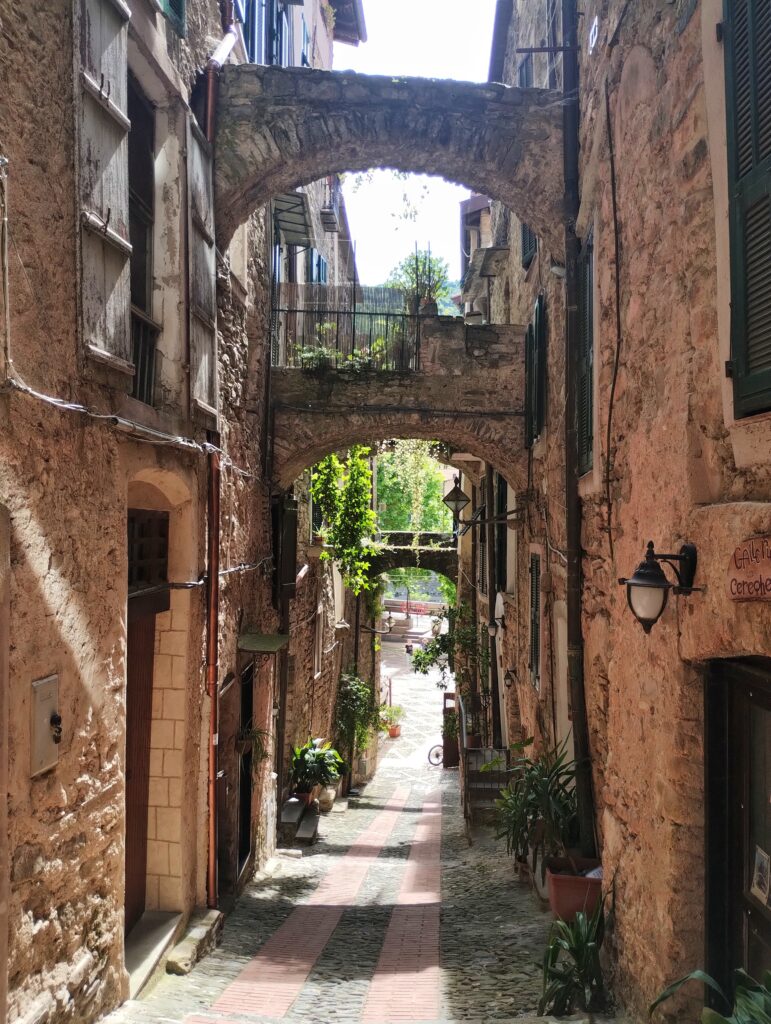
The alleyways are narrow, twisty, and full of surprises — including the occasional cat giving you the side-eye like you’re invading its medieval home. Getting lost here is highly encouraged, so if you find yourself walking in circles, congratulations, you’re doing it right.
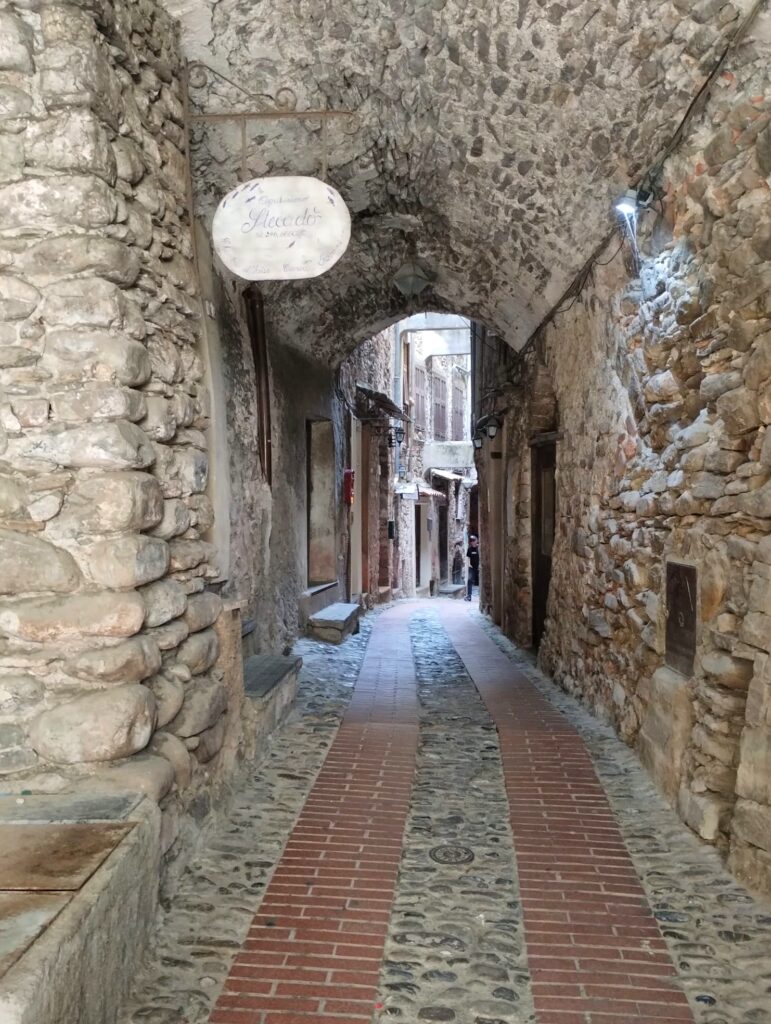
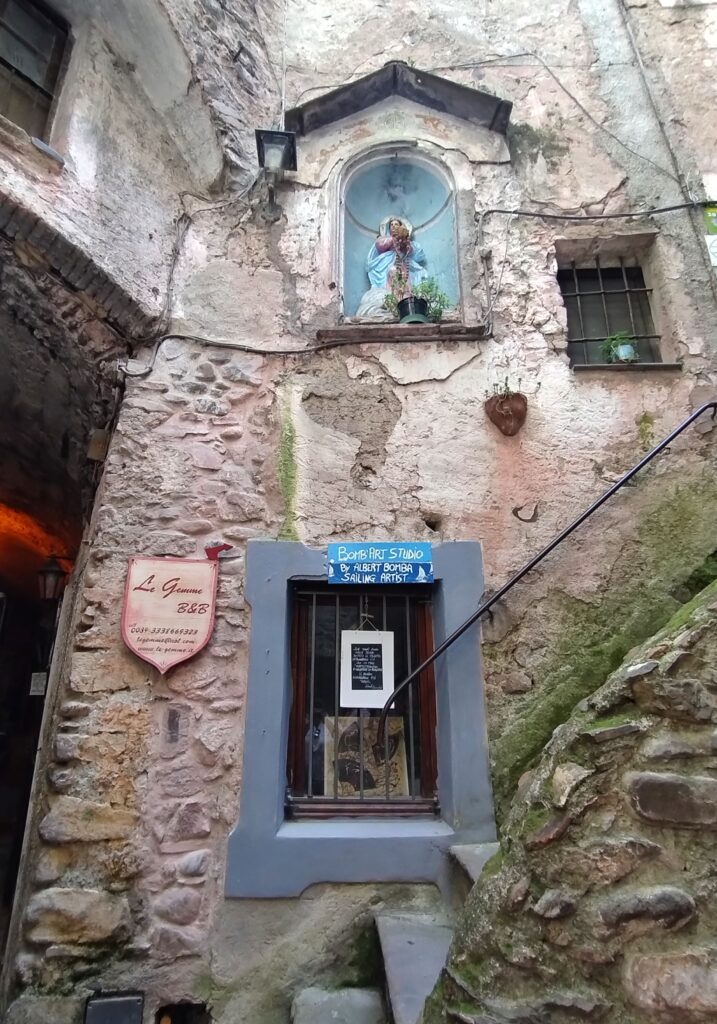
There are small souvenir shops and local artists that like to show off their handywork.
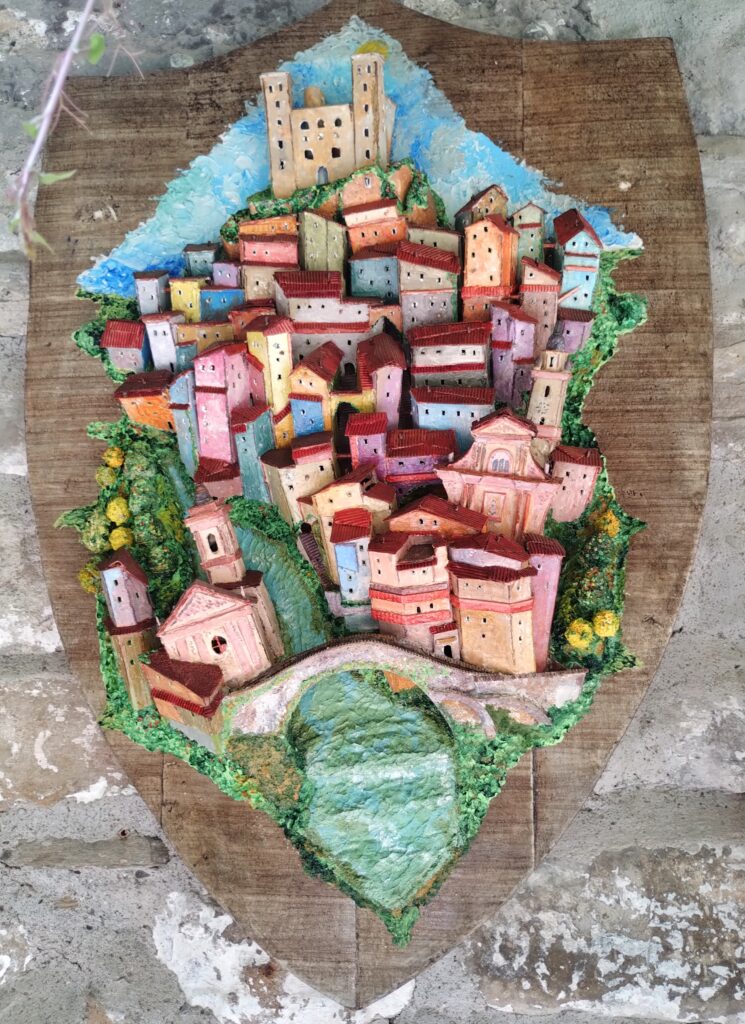
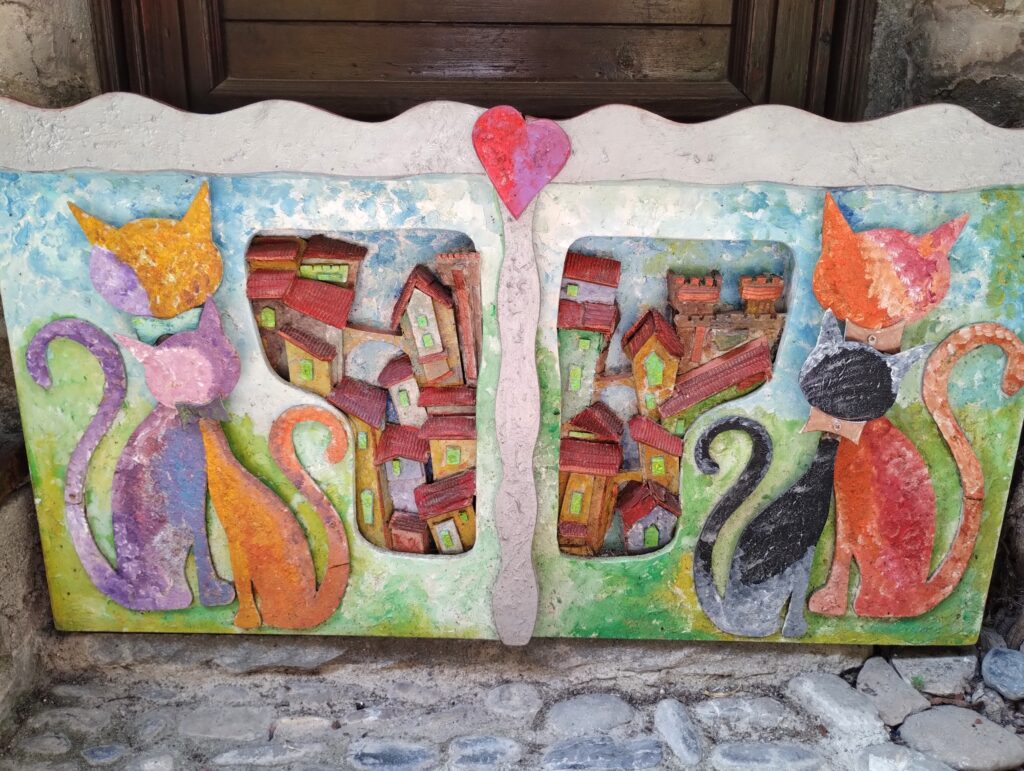
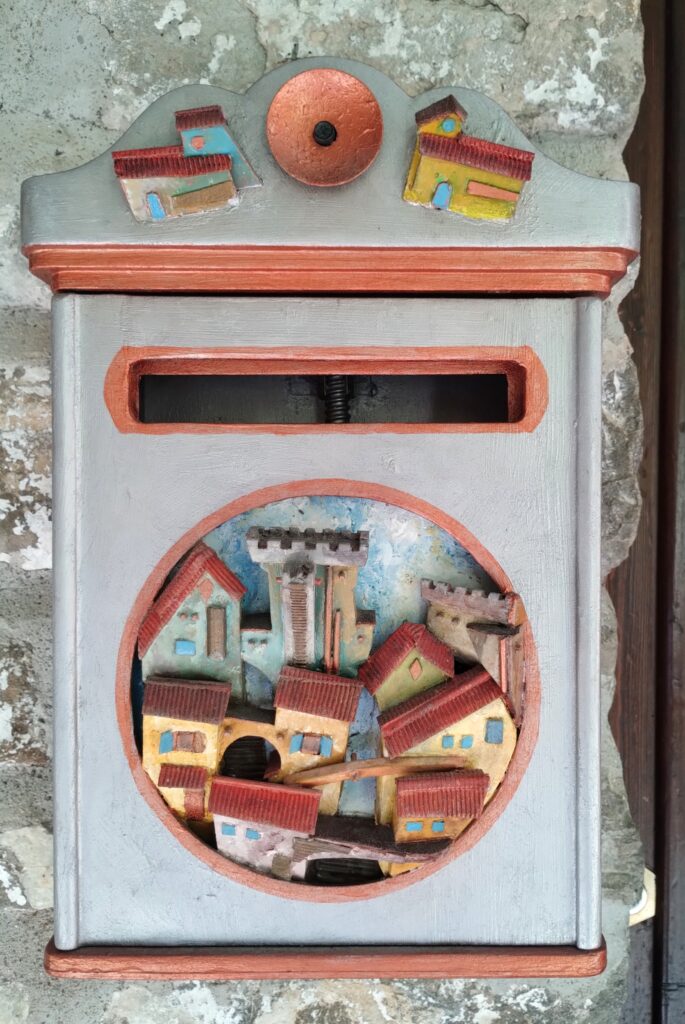
It’s the kind of place where you could get lost for half an hour and not mind.
A Little Bit of History (Promise, It’s Interesting)
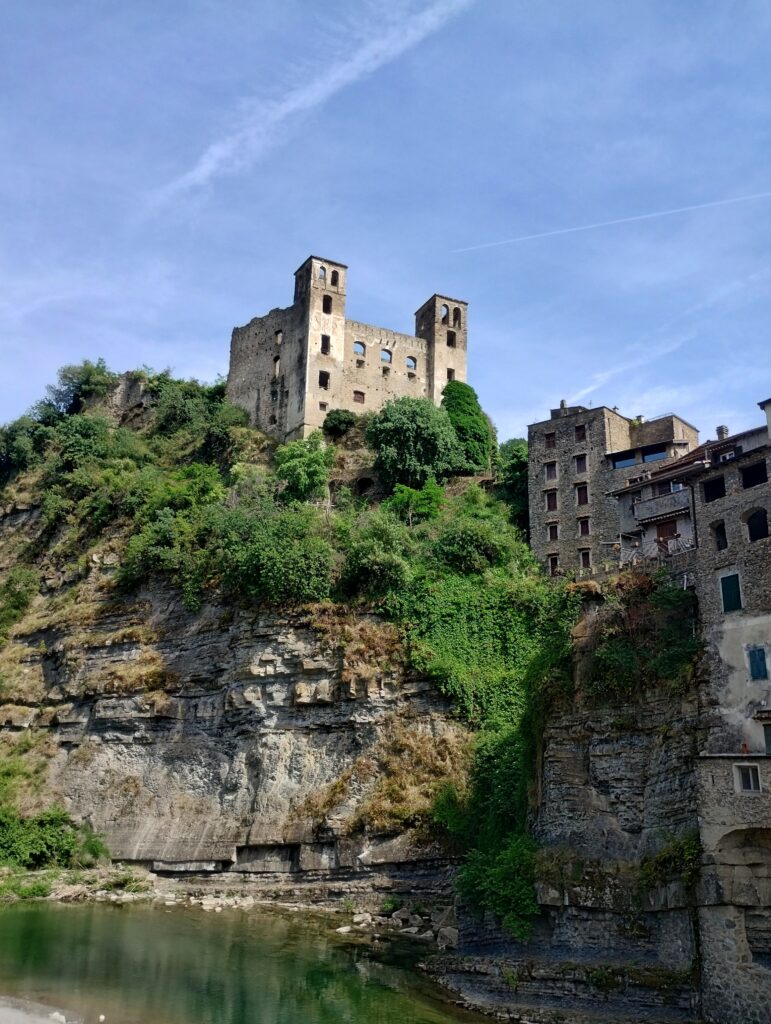
Dolceacqua has been around since medieval times and was ruled by the Doria family, who basically ran this bit of Liguria for centuries. Their old stronghold — the Castello dei Doria — still watches over the town. It’s partly in ruins now, but that just makes the climb more atmospheric.
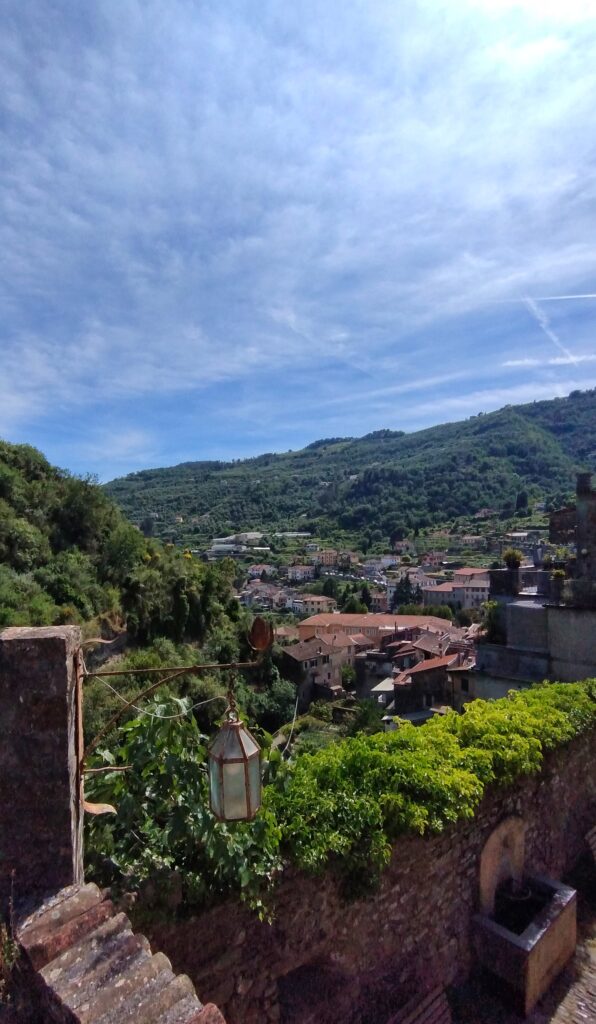
From the top, you get a panoramic view that’s all olive groves, terracotta rooftops, and the kind of landscape that makes you start Googling “how much is property in Liguria.”
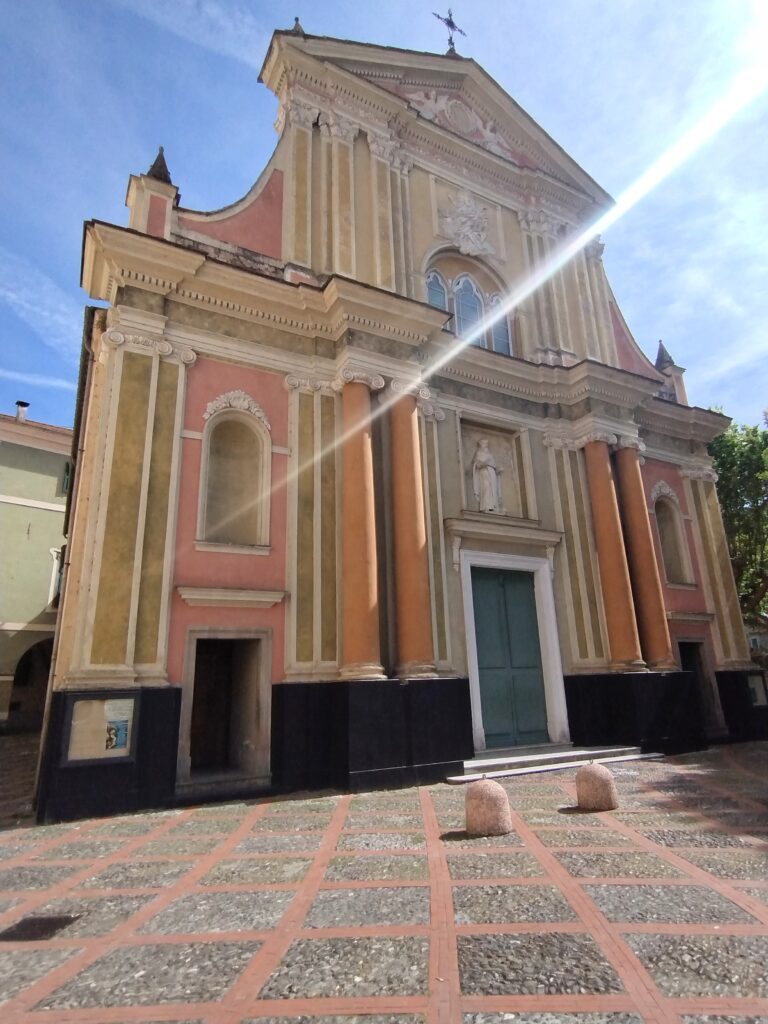
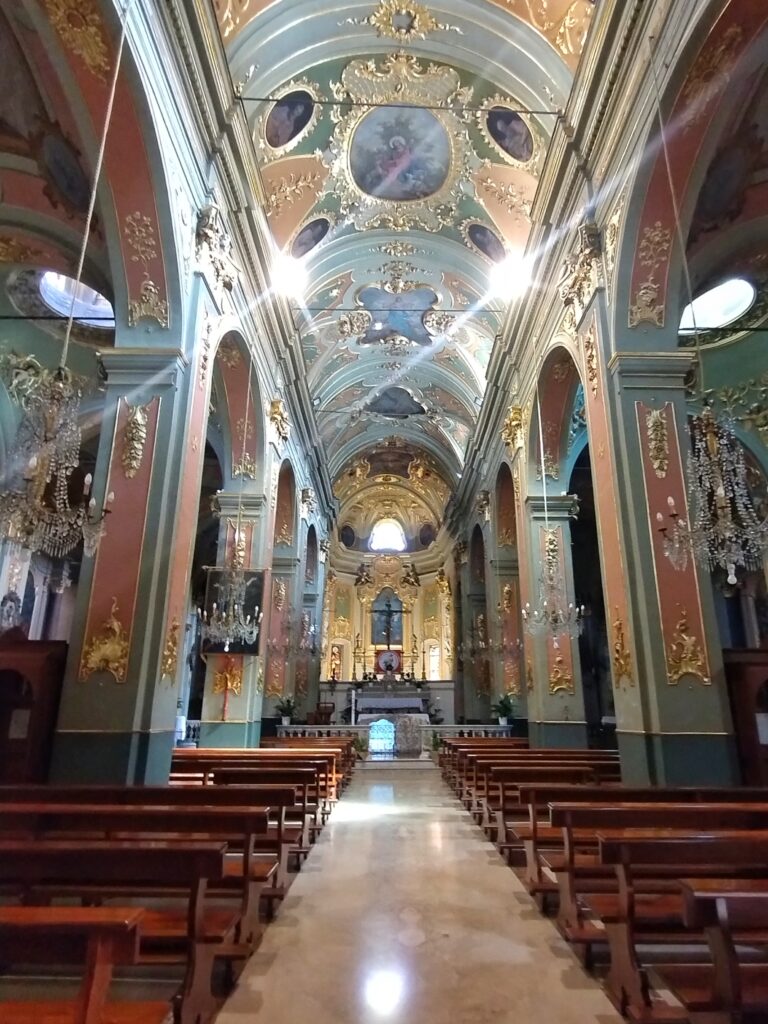
Back in the main square, the Chiesa di San Antonio Abate church (Church of Saint Anthony the Abbot) stands quietly, looking effortlessly grand in that “I’ve been here for 400 years” kind of way. The façade is classic Ligurian Baroque — bold, gold, and full of detail.
And of course, there’s the bridge — the real star of the show. Built in the 1400s, the Ponte Vecchio connects the old town to the new, spanning the river in a single graceful arch. Monet called it “a jewel of lightness,” which sounds poetic, but he wasn’t wrong. It’s even better in person, especially if you catch it in the late afternoon sun.
Gelato, Wine & All That Good Stuff
After all that exploring (and uphill walking), we did what any sensible traveller would do: stopped for gelato. Probably the best decision of the day.
The village has a few cafés and gelaterias dotted around, each claiming to be “the best.” There’s really only one way to find out — try them all. Sit by the river, let the world go by, and watch as visitors attempt the impossible art of eating gelato before it melts. We headed off to Gelato Monet and boy, was it worth it!
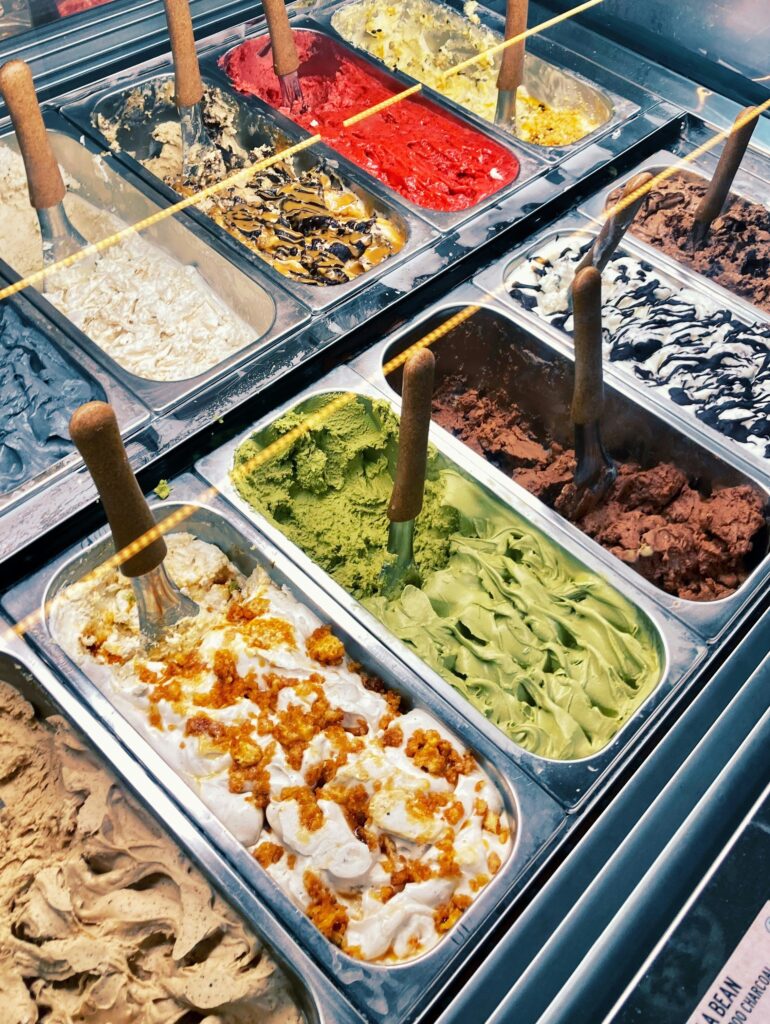
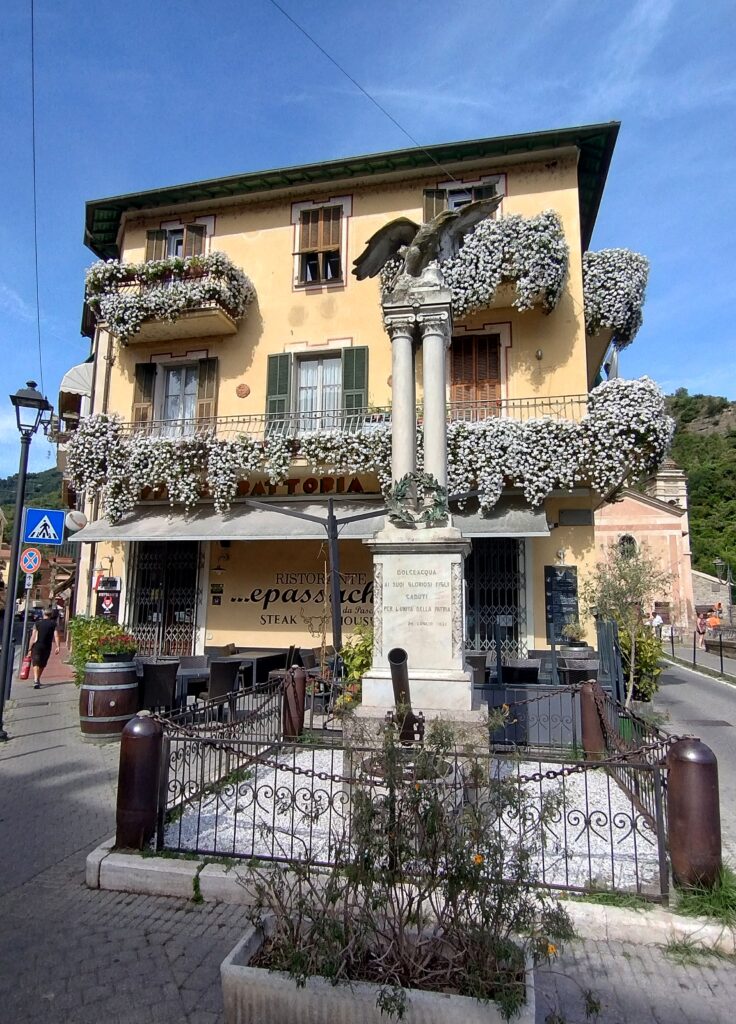
We sat on some steps in the newest part of town… (well, it’s still pretty old but not medieval), ate our ice creams before they melted and did our favourite pastime – people watching!
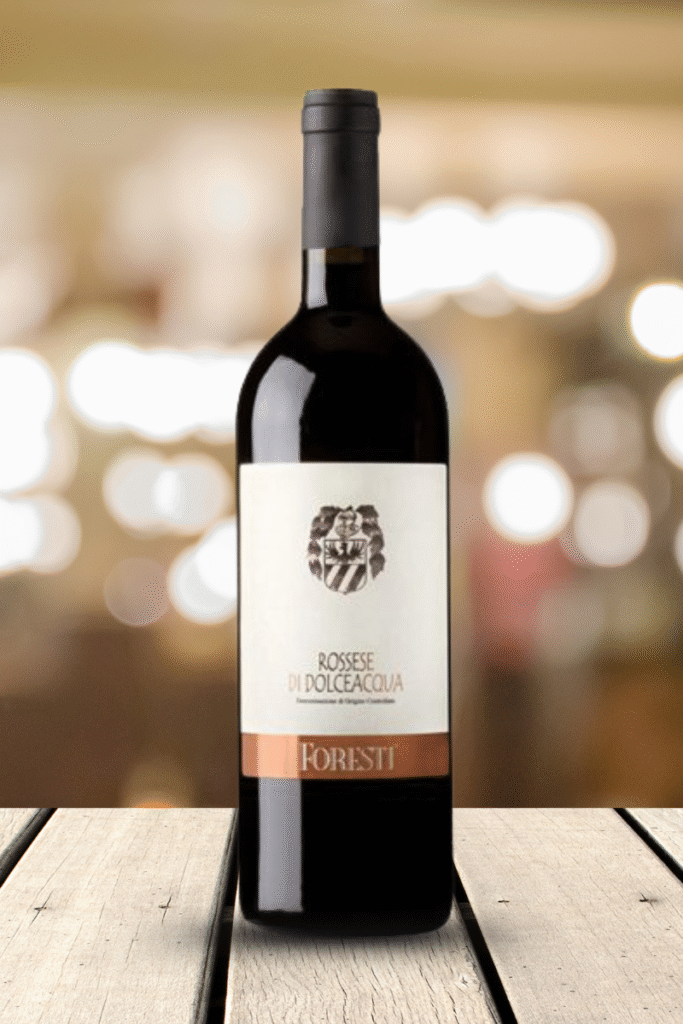
Dolceacqua is also known for its Rossese di Dolceacqua DOC wine — a local red that’s light, slightly spicy, and dangerously easy to enjoy. Grab a glass, grab a terrace, and toast to the fact that you’re here and not answering emails.
By the end of the day, we’d zigzagged every curve of the Ponte Vecchio, huffed and puffed our way up to the castle, and sampled the generous portions of gelato this place had to offer. Dolceacqua doesn’t demand your attention — it sneaks up on you.
Between the echo of footsteps on stone, the smell of fresh bread drifting from alleyways, and the golden light sliding down the hillside, it’s the kind of village you don’t just visit… you wander, nibble, and soak up every quirky, cobbled-minute of it.
Tips for Visiting Dolceacqua
- Wear proper shoes. Cobblestones are not flip-flop friendly!
- Pause by the river. It’s peaceful, shady, and great for people-watching.
- Eat the gelato. No explanation needed.
- Visit the castle. The climb’s worth it.
- Pop into the church. It’s as pretty as it looks.
- Cross the bridge slowly. Monet would approve.
- Avoid summer weekends. Fewer crowds, more calm.
- Bring cash. Some cafés still live happily in the past.
Dolceacqua doesn’t scream for attention — it just quietly wins you over. It’s got history without the crowds, beauty without the effort, and gelato that makes you forget what diet you were ever on.
It’s Italy at its best: a little messy, very charming, and just the right amount of wonderful.